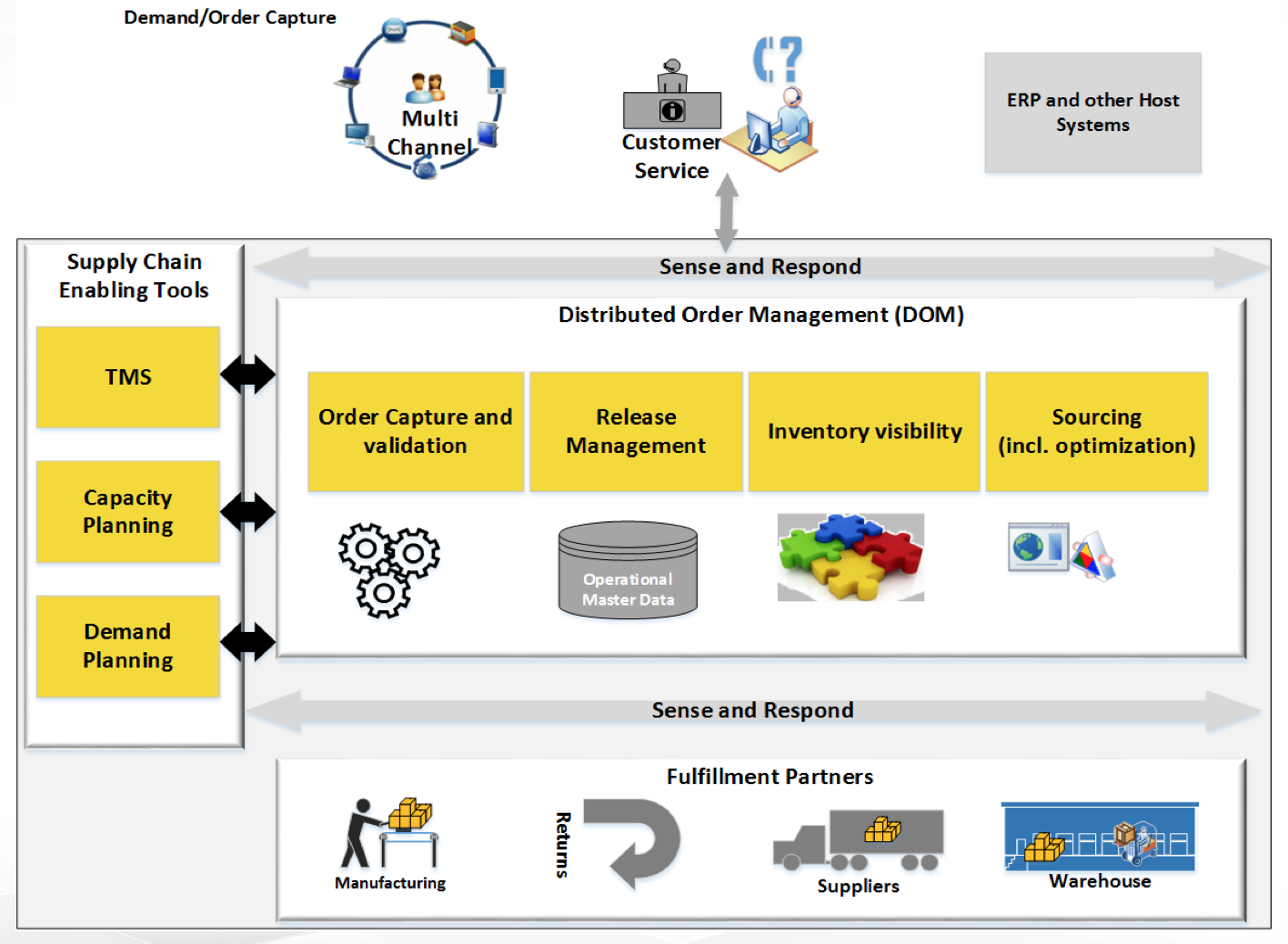
The best warehouse management software for healthcare companies in 2026 are Softeon, Manhattan Associates, Blue Yonder, Infios, Infor, and Datex. Each platform takes a different approach to the same problem: keeping temperature-sensitive, serialized, and life-critical products moving accurately through the distribution center while standing up to FDA, DSCSA, and DEA scrutiny. The right fit depends on how much of your operation is pharma-specific versus general distribution, how much automation you’re running, and whether you need a platform built around healthcare logistics or a healthcare “mode” bolted onto a broader WMS.
Introduction
Healthcare and pharma warehouses don’t get graded on throughput alone — they get audited. A warehouse management system for this industry has to do everything a standard WMS does (receiving, putaway, picking, packing, shipping, labor) while also enforcing lot and expiration control, DSCSA serialization, cold chain integrity, controlled substance handling, and a defensible audit trail that holds up under FDA or DEA inspection. Miss any of those, and the cost isn’t just a chargeback — it’s a recall, a compliance finding, or a patient safety issue.
That’s why “best WMS” and “best WMS for healthcare” aren’t the same question. A platform can be an excellent general-purpose WMS and still be a poor fit for a 3PL managing specialty pharma, or a hospital IDN managing dozens of storerooms and ambulatory sites. The vendors below all serve healthcare and life sciences customers today, but they get there in different ways — some with a purpose-built pharma data model, some with healthcare as one vertical among many, and some by bundling warehousing into a broader ERP.
What to look for in a healthcare WMS
- Lot, batch, and expiration control — FEFO/FIFO enforcement, expiration date management, and quarantine/hold workflows that keep expired or recalled product off the pick face
- DSCSA and serialization support — serial number capture, aggregation, and verification down to the saleable unit, plus a clear path from current requirements to full traceability
- Cold chain and TOR (time-out-of-refrigeration) management — temperature zone control and excursion tracking for vaccines, biologics, and specialty drugs, protecting overall shelf life
- Controlled substance handling — DEA Schedule I–V workflows, USP <800> hazardous drug handling, and electronic audit trails (21 CFR Part 11-style)
- Recall management — the ability to isolate and trace an affected lot or serial number, enforced through tight lot control, across every location, order, and shipment it touched
- Integration depth — clean connections into ERP, EHR/formulary systems, national drug databases (NDC), and automation/robotics on the floor
- Deployment fit — whether the platform scales down to a single DC or up to a multi-site distribution network without re-platforming
Comparison at a glance
(Indicative — confirm current certifications and pricing directly with each vendor.)
| Platform | Best for | Healthcare-specific depth | Compliance support | Deployment | Pricing |
| Softeon | Pharma/healthcare 3PLs, distributors, and manufacturers wanting a modular, purpose-configured WMS | Purpose-built healthcare/pharma module: cold chain/TOR, eSampling, controlled substances, clinical trial logistics | FDA-compliant, GxP computer system validation, DSCSA serialization support | Cloud or on-prem, modular rollout | Custom |
| Manhattan Associates | Large pharma wholesalers and distributors running high-volume, automated DCs | Lot/serial tracking, temperature-controlled storage, flow-through for short shelf-life product | Audit trails and serial tracking; compliance certifications confirmed directly with vendor | Cloud-native, versionless SaaS | Custom, enterprise |
| Blue Yonder | Enterprise pharma manufacturers and distributors needing WMS tied to broader supply chain planning | Shelf-life-aware distribution planning, batch-level serialization, cold chain workflows | DSCSA/FMD compliance workflows, automated recall triggers | Cloud, integrated with BY planning suite | Custom, enterprise |
| Infios | Mid-size to large healthcare distributors and 3PLs already in the Körber/Infios ecosystem | Cold-chain and pharma handling inherited from Körber Pharma heritage | Compliance risk workflows for cold-chain and inventory integration | Cloud or on-prem | Custom |
| Infor | Hospital IDNs and healthcare providers wanting warehousing embedded in ERP | Distribution Management for IDNs (storerooms, ambulatory sites, clinics); standalone WMS for larger networks | Native ERP embedding reduces integration overhead | Cloud (CloudSuite) or on-prem | Custom |
| Datex | Small-to-mid pharma, medical device, and 3PL operations wanting Tier-1 features at a lower cost | Footprint Pharma WMS: DEA Form 222, quarantine, nested serialization, cold storage | 21 CFR Part 11, cGMP/GxP, DSCSA-ready | Cloud or on-prem | Published tiers; generally lower TCO than Tier-1 |
1. Softeon
Softeon (part of IFS) built its healthcare and pharma platform around the reality that most legacy WMS and ERP-centric systems force order management, inventory, dispensation, and shipping into silos. Softeon’s modular, component-based architecture is designed to unify those functions instead, with validated API libraries and master data management for NDC and national drug databases baked in. The result is a warehouse management system that’s meant to be onboarded quickly rather than customized for years.
What sets Softeon apart for this industry specifically is the depth of the healthcare module: cold chain and time-out-of-refrigeration (TOR) management, full DSCSA serialization support (including migration paths for customers moving between DSCSA phases), controlled substance handling, clinical trial logistics, and an eSampling portal for pharma reps managing HCP samples. Order orchestration for home delivery, specialty drugs, refrigerated, hazardous, and controlled substance orders runs through Softeon’s Distributed Order Management, while the Warehouse Execution System coordinates automation on the floor. The WMS is FDA-compliant and has completed computer system validation for GxP environments, which matters to any team that has to prove — not just claim — regulatory readiness.
- Best for: Healthcare and pharma distributors, 3PLs, and manufacturers that need a modular WMS purpose-configured for regulated logistics rather than adapted after the fact
- Standout features: Cold chain/TOR management, DSCSA serialization and phase migration support, controlled substance handling, clinical trial logistics, eSampling for HCP orders, drug recall workflows
- Integrations: Validated API libraries, MDM services for NDC and national drug databases, ERP and automation/robotics connectivity (conveyors, ASRS, put walls, AMRs)
- Considerations: As a modular platform, the strongest results come from configuring the healthcare-specific components rather than treating it as an off-the-shelf generic WMS
- Pricing: Custom, scoped to modules and deployment size
Key takeaway: Best for healthcare and pharma operations that want compliance and cold chain built into the data model from day one, not added later.
2. Manhattan Associates
Manhattan Active® Warehouse Management is a common choice among large pharmaceutical wholesalers — the vendor cites eight of the world’s top ten relying on its platform. Its cloud-native, versionless architecture means healthcare distributors get continuous updates without the downtime that regulated environments often can’t absorb, and its scale makes it a natural fit for high-volume, highly automated distribution networks moving product from warehouse to point of care.
For healthcare specifically, Manhattan Active supports lot tracking, expiration date control, serial number tracking, and flow-through processing for products with short shelf lives, alongside temperature-controlled storage support. That said, independent evaluations note the vendor doesn’t always publicly list specific compliance certifications (SOC 2, HIPAA, and similar), so healthcare buyers should request documentation directly to confirm fit against their own regulatory requirements.
- Best for: Large pharmaceutical wholesalers and distributors running high-volume, highly automated DCs
- Standout features: Versionless cloud architecture, embedded WES, lot/serial/expiration tracking, flow-through for short shelf-life products, digital twin visualization
- Integrations: Native ERP, TMS, CRM connectivity; broad automation and robotics support
- Considerations: Enterprise-scale platform with enterprise-scale implementation; request compliance documentation directly for regulated environments
- Pricing: Custom, enterprise-tier
Key takeaway: Best for large, automation-heavy pharma distribution networks that need scale more than a healthcare-only feature set.
3. Blue Yonder
Blue Yonder’s Warehouse Management System is most compelling for healthcare and life sciences organizations that want warehouse execution tied directly into demand and supply planning — the same platform that forecasts pharmacy replenishment can also drive picking and labor on the floor. Its life sciences-specific planning capabilities respect shelf-life constraints, support alternate sourcing compliance by market, and manage date-sensitive inventory across direct-to-pharmacy and direct-to-hospital distribution models.
On compliance, Blue Yonder frames its value around embedding AI-powered workflows into DSCSA and FMD requirements — batch-level serialization, automated recall triggers, and a digital chain of custody from production to patient. Reference customers report measurable results, including a documented 15–20% reduction in annual shipping costs for one pharmaceutical customer alongside maintained compliance standards.
- Best for: Enterprise pharma manufacturers and distributors who want WMS and supply chain planning on one platform
- Standout features: Shelf-life-aware distribution planning, AI-driven compliance workflows, automated recall triggers, agentic AI for warehouse execution
- Integrations: Native tie-in to Blue Yonder demand/supply planning, transportation management, and labor management
- Considerations: Full value depends on adopting the broader Blue Yonder planning suite alongside the WMS
- Pricing: Custom, enterprise-tier
Key takeaway: Best for pharma organizations that want warehouse execution unified with demand planning and network-wide compliance workflows.
4. Infios
Infios (formerly Körber Supply Chain Software, and before that HighJump/K.Motion) carries a Pharma business area directly in its parent company’s DNA — Körber AG groups Pharma alongside Supply Chain, Digital, and Technologies. That heritage shows up in cold-chain handling capability, though Infios’ healthcare presence today is less about a dedicated healthcare product page and more about applying its established WMS to pharma and cold-chain use cases within a broader distribution and 3PL customer base.
Infios is a reasonable fit for healthcare distributors already running large-scale, complex operations — the platform is generally positioned for 100,000-square-foot-plus facilities with high throughput — but healthcare-specific buyers should scope the pharma/cold-chain capabilities carefully given the vendor’s recent rebrand and broader supply chain focus.
- Best for: Mid-size to large healthcare distributors and 3PLs already invested in the Körber/Infios ecosystem
- Standout features: Cold-chain operational support, order management and TMS integration (via MercuryGate), modular WMS scaling
- Integrations: Order management, transportation management, and existing Körber/Infios supply chain modules
- Considerations: Healthcare/pharma is one vertical among several rather than the platform’s primary focus; confirm current compliance scope post-rebrand
- Pricing: Custom
Key takeaway: Best for healthcare distributors who want cold-chain-capable WMS as part of a wider supply chain execution suite.
5. Infor
Infor takes a different route into healthcare warehousing: instead of a standalone WMS as the primary offer, it provides Distribution Management embedded natively in its ERP for integrated healthcare delivery networks (IDNs) — covering inventory and warehousing across internal and external storerooms, ambulatory surgery centers, clinics, and physician offices. For larger healthcare providers with more complex distribution needs, Infor’s standalone WMS handles broader warehouse operations, including receiving, put-away, picking, and 3PL billing.
The pitch is fewer licenses and less third-party integration work, since warehousing logic lives inside the same data model as the rest of the ERP. That’s attractive for hospital systems and IDNs whose core system of record is already Infor, but organizations without that ERP relationship may find a purpose-built WMS delivers deeper healthcare-specific functionality out of the box.
- Best for: Hospital IDNs and healthcare providers wanting warehousing embedded in their ERP rather than run as a separate system
- Standout features: Distribution Management for multi-site IDN inventory, 3D visual warehouse, labor management, embedded 3PL billing
- Integrations: Native to Infor CloudSuite/ERP; open API framework for RF, voice, and visual warehousing
- Considerations: Best value is realized by organizations already standardized on Infor ERP; less differentiated as a standalone healthcare WMS
- Pricing: Custom
Key takeaway: Best for healthcare providers and IDNs that want warehousing unified with ERP rather than a separate best-of-breed WMS.
6. Datex
Datex Footprint® WMS has spent over a decade building pharmaceutical- and medical device-specific editions of its platform, aimed squarely at manufacturers, 3PLs, and distribution centers that need Tier-1-style compliance features without a Tier-1 price tag. The pharma edition supports DEA Form 222 processing, product hold/inspection/quarantine, multi-level package tracking, nested serialization, and product returns, with lot, serial, SKU, UPC, batch, package, and vial-level traceability.
Compliance is central to Datex’s pitch: the platform supports 21 CFR Part 11 electronic signatures and audit trails, cGMP/GxP validated workflows, and DSCSA serialization aggregation and reporting, alongside continuous temperature and humidity monitoring for cold-chain zones. Datex positions itself explicitly as a lower-cost alternative to Tier-1 systems for pharma, medical device, and healthcare operations that don’t need full enterprise scale.
- Best for: Small-to-mid pharma, medical device, and 3PL operations that need regulated-industry features without Tier-1 enterprise cost
- Standout features: DEA Form 222 workflows, nested serialization, quarantine/hold management, cold-chain temperature and humidity monitoring, validation services included
- Integrations: RF and RFID support, configurable workflow engine for custom business processes
- Considerations: Strongest fit for small-to-mid operations; larger, highly automated networks may outgrow it faster than Tier-1 platforms
- Pricing: Generally positioned as lower total cost of ownership than Tier-1 WMS vendors
Key takeaway: Best for smaller and mid-size healthcare and pharma operations that need serious compliance functionality without enterprise-level cost or complexity.
Conclusion
There’s no universal “best” here — the right healthcare WMS depends on where compliance risk actually lives in your operation. If cold chain, DSCSA, and controlled substance handling are core to the business, a platform purpose-built around those workflows (like Softeon or Datex) tends to require less customization to get audit-ready. If you’re running a high-automation, high-volume distribution network, scale-first platforms like Manhattan Associates or Blue Yonder bring more horsepower, provided you confirm their compliance documentation matches your regulatory footprint. And if your organization is already standardized on a specific ERP or supply chain suite, Infor or Infios can reduce integration overhead by keeping warehousing inside that ecosystem. Whichever direction you lean, request a demo scoped to your actual product mix — lot control, DSCSA, and cold chain look very different on paper than they do against your real SKUs.
Frequently Asked Questions (FAQ)
A healthcare-specific WMS builds regulatory requirements into its core data model — lot/expiration control, DSCSA serialization, cold chain/TOR management, and controlled substance workflows — rather than adding them as configuration on top of a generic system. That usually means faster time to compliance and fewer custom integrations to close functionality gaps.
Most of the vendors above — including Softeon, Blue Yonder, and Datex — market explicit DSCSA support, from serial number capture and aggregation to phase migration for organizations moving toward full traceability. Coverage and depth vary, so confirm current DSCSA capabilities directly with each vendor, since requirements continue to evolve.
Very important for any organization handling vaccines, biologics, or temperature-sensitive specialty drugs. Look for time-out-of-refrigeration (TOR) tracking, continuous temperature/humidity monitoring, and excursion alerts tied directly to inventory records — not a separate system that has to be reconciled against the WMS after the fact.
Yes, this is standard for the platforms above, though the integration model differs. Some (like Infor) embed warehousing directly inside the ERP; others connect via APIs to ERP, EHR/formulary systems, and national drug databases. If your organization is already standardized on a specific ERP, that can narrow the field quickly.
Timelines depend on data quality, the number of sites, integration scope (ERP, EHR, automation), and how much validation documentation (IQ/OQ/PQ, computer system validation) is required for GxP environments. Modular, cloud-based deployments with pre-validated components generally move faster than fully customized, on-premises rollouts.