A Warehouse Management System (WMS) is software that orchestrates and optimizes day-to-day warehouse activities such as receiving, putaway, picking, packing, and shipping. By delivering real-time visibility of inventory, locations, labor, and equipment, a WMS ensures the right products move to the right place at the right time. If you are asking what is a warehouse management system (WMS)?, think of it as the operational backbone inside the four walls. Modern solutions help organizations improve accuracy, increase throughput, reduce operating costs, and deliver consistent service across complex, multi-site supply chains. For anyone exploring what is WMS or what is WMS system, the answer comes down to control, visibility, and execution.
Warehouse management system overview
A WMS is a specialized operational system designed to manage warehouse processes and data. Its core purpose is to control inventory and workflows within the four walls and surrounding yards, guiding teams on what to do, when to do it, and how to do it efficiently. By aligning people, processes, and physical assets, a WMS drives reliable, repeatable performance in demanding fulfillment environments. When people ask what is warehouse management, this is the practical, day-to-day reality.
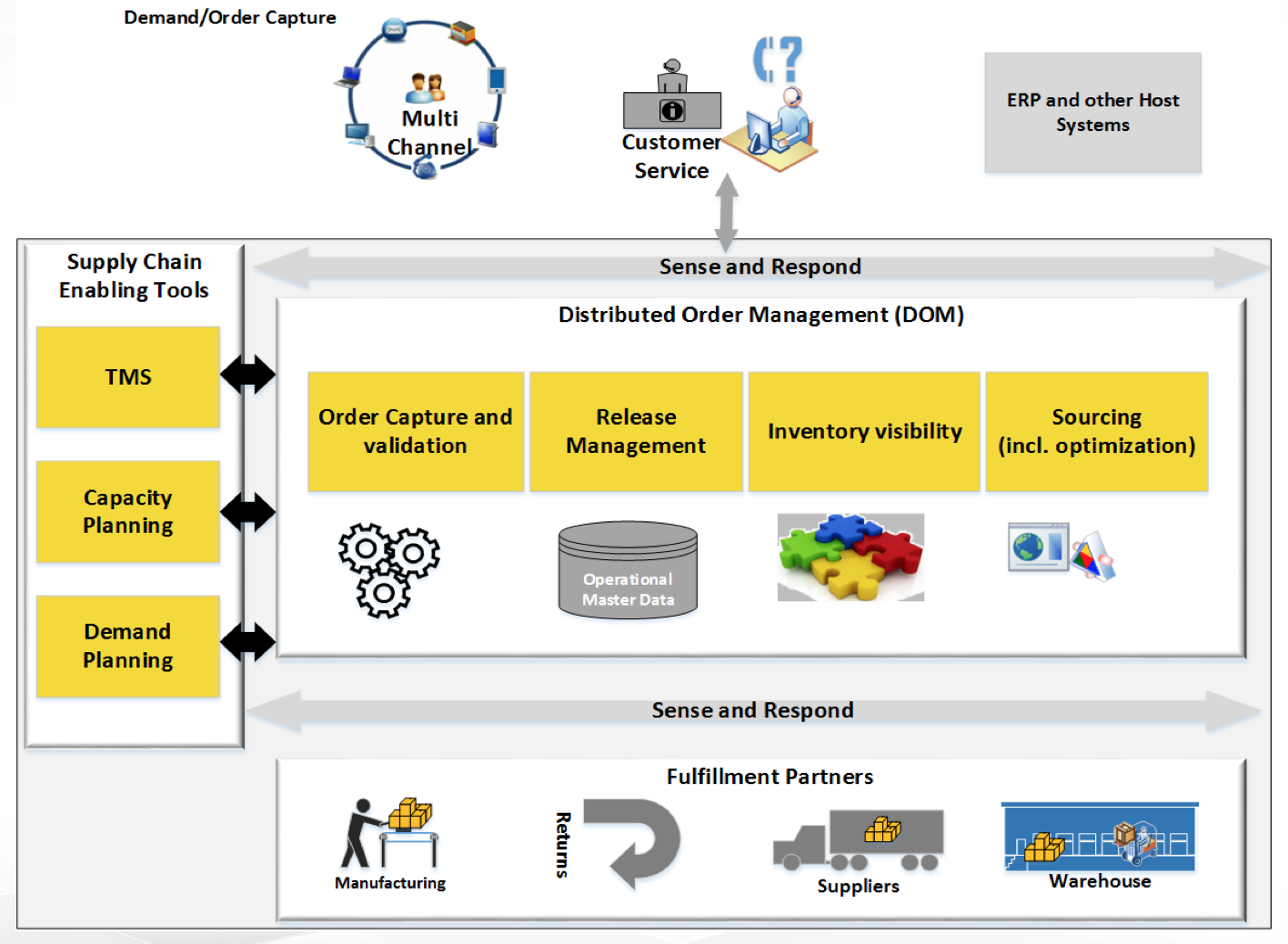
Within the broader enterprise stack, a WMS complements systems such as Enterprise Resource Planning (ERP), Transportation Management Systems (TMS), and Manufacturing Execution Systems (MES). The ERP typically governs orders, inventory valuation, finance, and purchasing, while the WMS executes the physical movement and handling of goods. The WMS confirms receipts, shipments, and stock adjustments back to the ERP, and coordinates with the TMS for carrier scheduling, appointments, and shipping documentation. This is where what is a warehouse management system becomes more than a definition—it’s the connector between planning and execution.
Key users include warehouse associates, supervisors, and managers who depend on the WMS to plan and execute tasks; inventory control specialists who safeguard accuracy; customer service and order management teams who rely on real-time status; and IT and operations leaders who integrate, secure, and scale systems. In omni-channel and manufacturing environments, planners and supply chain leaders leverage WMS data to keep supply, demand, and service levels in balance. If you’re still thinking what is WMS system in practice, it’s the tool that keeps everyone working from the same playbook.
Core features and functions of a modern WMS
Inventory control sits at the foundation. A WMS maintains a real-time ledger of stock by item, lot, serial number, and location across aisles, bins, and zones. Location management supports intelligent slotting strategies and dynamic locations, while cycle counting and audit tools sustain accuracy without interrupting operations. Barcode scanning, RFID, and IoT sensors provide continuous tracking of where goods are and, when relevant, their condition. Put simply, when you ask what is a warehouse management system (WMS)?, inventory integrity is a big part of the answer.
Warehouse workflows span inbound to outbound. Receiving and putaway functions verify advanced shipping notices, capture lot and serial data, and direct putaway to optimal locations. Picking strategies can include wave, batch, zone, and cluster picking, with support for replenishment, cross-docking, and flow-through to reduce touches and lead time. Packing and shipping capabilities validate orders, print labels and documents, and integrate with carriers for rate shopping and manifesting. Many solutions also manage value-added services such as kitting, light assembly, and returns processing. If your question is what is WMS, think of it as the conductor coordinating each step.
Labor management capabilities help assign work, balance loads, and monitor performance. The WMS allocates tasks based on priorities, equipment type, and worker skills, guiding staff with mobile devices or voice. Dashboards and engineered labor standards reveal productivity trends, while task interleaving, travel minimization, and congestion avoidance improve throughput without compromising accuracy. These features support safer, more efficient operations even during peak demand. In short, what is warehouse management without people? The WMS brings structure and support so teams can perform at their best.
Types and deployment models of WMS
WMS solutions can be deployed on-premise, in the cloud, or as a hybrid model. On-premise deployments offer fine-grained control over infrastructure and customization but require more internal IT resources and typically involve longer upgrade cycles. Cloud-hosted WMS solutions deliver faster implementation, scalability, continuous updates, and often a lower total cost of ownership. Hybrid approaches combine core cloud capabilities with on-site components for edge processing, automation connectivity, or unique regulatory needs.
Best-fit options vary by operational size and complexity. Small to midsize operations may favor a cloud-native WMS with preconfigured best practices, streamlined integration, and rapid time to value. Larger or highly complex operations may need advanced capabilities such as multi-site orchestration, wave and waveless picking, yard and dock management, temperature-controlled tracking, and robust automation integration. Third-party logistics providers often prioritize multi-tenant capabilities, customer-specific rules, and flexible billing features. When someone asks what is WMS system for my business, the answer depends on your footprint, complexity, and growth plans.
Integration is essential for end-to-end flow. The WMS integrates with ERP for orders, inventory, and financial updates; with TMS for carrier selection, appointments, and freight documents; and with automation such as conveyors, AS/RS, AMRs, and sortation systems using standard interfaces and warehouse control or execution systems. Modern APIs, event-driven architectures, and integration-platform-as-a-service tools streamline data exchange while preserving resilience and traceability. This is the practical side of what is a warehouse management system—keeping data and processes in sync
Benefits and business impact
A well-implemented WMS unlocks measurable efficiency gains. Real-time visibility and location accuracy reduce search time and errors, driving higher order accuracy and less rework. Optimized workflows and task interleaving increase throughput, while better slotting and replenishment lower travel distance and congestion. These improvements reduce carrying costs by decreasing safety stock and minimizing obsolescence, shrink, and write-offs. If you’re evaluating what is WMS in terms of ROI, these are the headline benefits.
Scalability and agility are key advantages. A modern WMS adapts to seasonal peaks, new channel growth, and shifting product mixes. Configurable rules and modular capabilities let teams fine-tune processes without heavy development. Faster order cycle times and consistent fulfillment boost customer metrics such as on-time delivery, perfect order rate, and fill rate, helping sustain service commitments even as complexity grows. In other words, what is warehouse management without agility? It’s not enough to keep up—you need to stay ahead.
Common KPIs include inventory turns, order accuracy, on-time shipment rate, pick lines per hour, dock-to-stock cycle time, and labor productivity (units or lines per labor hour). Many organizations also track cost per order, space utilization, aging inventory, and return processing time. Embedded analytics and dashboards in the WMS help teams monitor trends, pinpoint bottlenecks, and take targeted action to raise performance. These measures make what is a warehouse management system tangible and accountable.
Implementation and best practices
Successful programs start with a phased rollout aligned to business priorities. Phasing reduces risk by sequencing sites or processes and allows teams to stabilize, learn, and capture early wins. Change management is essential: engage stakeholders early, define roles and responsibilities, and communicate the case for change clearly. Data migration should prioritize item masters, locations, units of measure, bills of materials where applicable, and historical stock balances, with rigorous cleansing and governance to ensure accuracy.
Process mapping identifies current and future workflows and highlights opportunities to standardize and streamline. Configuration should align with industry best practices rather than heavy customization. Pilot testing in a controlled area validates rules, task flows, device setups, and user experience. Comprehensive testing should include functional use cases, ERP and TMS integrations, label and document printing, exception handling, and performance under load. A detailed cutover plan should cover final inventory counts, user provisioning, and contingency steps to protect service levels. This is the straightforward path from asking what is a warehouse management system to seeing it working on your floor.
Training must be role-based and practical, using hands-on exercises with handhelds, voice devices, or workstations. After go-live, governance mechanisms such as a process council and change control ensure configurations remain aligned with evolving needs. Continuous improvement cycles, supported by WMS analytics, uncover opportunities for slotting enhancements, replenishment tuning, and labor optimization. Regular KPI reviews and disciplined root-cause analysis help sustain momentum and benefits over time. That’s what is WMS done right—steady, visible gains
Future trends and advanced capabilities
Automation is reshaping warehouses. Autonomous mobile robots, robotic arms, and goods-to-person systems reduce travel and improve ergonomics. WMS solutions increasingly coordinate with warehouse execution systems and machine controllers to orchestrate work across people and automation.
IoT devices provide real-time data on equipment health, temperature, humidity, and shock, enabling condition-based handling and compliance for sensitive goods.
Artificial intelligence enhances optimization and decision-making. Machine learning models predict demand and returns, recommend slotting adjustments, and dynamically choose picking strategies based on workload and congestion. Predictive analytics help plan labor, while prescriptive recommendations adjust waves or release priorities in real time. Anomaly detection identifies mis-scans and atypical movement patterns to reduce shrink and improve safety. If you find yourself asking what is WMS system going to look like tomorrow, expect more autonomy, more data, and smarter orchestration.
Mobile-first interfaces keep teams productive. Modern WMS solutions support Android handhelds, wearables, and voice-directed workflows for hands-free accuracy. Augmented reality overlays can guide associates to exact locations and confirm item identification, reducing training time and increasing consistency. As user experiences improve, intuitive interfaces and low-code configuration will shorten time to value and increase adoption. This evolution reflects the practical side of what is warehouse management in a fast-moving world.
FAQ
An ERP manages enterprise-wide processes such as order management, finance, purchasing, and inventory accounting. A WMS focuses on the physical execution of warehouse activities, directing tasks and capturing real-time movement and status. They integrate closely: the ERP provides orders and policies, and the WMS confirms operational execution and inventory updates. For those asking what is a warehouse management system (WMS)?, this distinction is central.
Any operation with inventory can benefit, and the value increases with order volume, SKU diversity,
compliance requirements, or service expectations. Smaller operations often start with cloud WMS for quick value, while larger or multi-site operations adopt advanced capabilities and deeper automation integration. Whether you’re asking what is WMS or what is warehouse management at your scale, the principles stay the same—right product, right place, right time.
Timelines vary by scope and complexity. A single-site cloud deployment with standard processes can take a few months. Multi-site or automation-intensive programs may run nine to eighteen months with phased rollouts. Success depends on data readiness, clear processes, and focused change management.
Yes. Many WMS solutions manage returns authorization, inspection, grading, refurbishment, and restocking, helping recover value, maintain accurate inventory, and minimize turnaround time.
Common enablers include barcode scanners, mobile handhelds, label printers, and wireless networks. Depending on complexity, RFID, scales, dimensioners, autonomous mobile robots, and conveyor or sortation systems may be integrated. The WMS should support standard protocols and APIs to onboard new technologies as operations evolve. If you came here wondering what is WMS system support in terms of hardware, start with scanning and mobility, then scale as needs grow.