Key capabilities to look for, how the vendor landscape breaks down, and the questions to ask before you choose a WMS.
What this guide covers
A warehouse management system (WMS) is the software system of record for everything that happens between receiving and shipping — inventory, putaway, replenishment, picking, packing, labor, and the orchestration of automation and robotics on the floor. This guide explains what capabilities to evaluate, how the vendor landscape is currently positioned (including Gartner’s Leaders and Visionaries), the architectural decisions that matter most, the KPIs that prove a WMS is working, and the questions to ask before you sign. It is written to help operators make an informed, objective decision — not to sell one product.
Who this guide is for
- Operations, supply chain, and IT leaders — VPs of distribution, directors of operations, and CIOs evaluating whether to replace a legacy WMS, consolidate point solutions, or implement a WMS for the first time.
- 3PLs and multi-client operators — teams that need multi-tenant billing, client-level reporting, and rapid onboarding built in, not bolted on.
- Evaluation teams — anyone building a shortlist, scoring vendor demos, or writing an RFP for a warehouse management system.
Table of contents
1. Why warehouse operations need a purpose-built WMS
2. Key capabilities to evaluate
3. Key evaluation criteria: what to prioritize
4. Composable and Tier-1 vs. rigid legacy vs. point solutions
5. The vendor landscape
6. Capability alignment matrix
7. The role of AI and agents in the modern WMS
8. KPIs to measure WMS success
9. Implementation, cost, and risk
10. Evaluation checklist and RFP questions
11. WMS terminology glossary
12. Frequently asked questions
Why warehouse operations need a purpose-built WMS
The warehouse has stopped being a quiet back-office function. E-commerce has pushed “eaches” picking into operations built for pallets. Labor is volatile and expensive. Robotics, goods-to-person systems, and pick-to-light have moved from novelty to necessity. And customers now expect same-day and next-day fulfillment as a baseline, not a premium.
A spreadsheet, a legacy inventory module bolted onto an ERP, or a WMS designed a decade ago for a single, simple flow cannot keep up with that combination. Warehouse complexity — not just warehouse size — is what actually drives the need for a dedicated WMS. Complexity shows up as SKU diversity, mixed temperature zones, multiple channels flowing through one building, a growing mix of automation vendors, and clients who each want their inventory and their reporting handled differently.
The right question isn’t “which WMS has the most features” — most Tier-1 platforms cover the basics. The right question is: which system fits how your operation actually runs today, and which one can be configured to fit how it needs to run next year, without a multi-year re-implementation. Softeon is a Tier-1 WMS provider built specifically to answer that question.
Key capabilities to evaluate
These are the capabilities that most often separate a WMS that runs your warehouse from one that only reports on it. Weight them against your own operation — a 3PL managing dozens of clients and a single-site manufacturer will prioritize this list differently.
Real-time visibility and inventory control
The foundation of any WMS: inventory should be tracked at the unit, case, and pallet level with full traceability of every movement — who moved it, from where, to where, and when. Look for license-plate tracking, lot and serial control, multiple inventory statuses (available, on hold, quarantined), and cycle counting that doesn’t require shutting down operations to stay accurate.
Receiving and putaway
Automated data capture at receiving (barcode, RFID, ASN matching) reduces the errors that cascade through every downstream process. Putaway logic should support directed, rules-based slotting by item velocity, size, owner, or handling requirement — not just “first empty bin.”
Slotting and space optimization
A WMS should be able to recommend and enforce optimal storage locations based on turnover, cube, and pick path, and re-slot dynamically as seasonality and demand shift. This is one of the highest-ROI, most underused capabilities in most implementations.
Order management, picking and wave strategies
The system should support wave and waveless release strategies, batch and cluster picking, task interleaving (combining putaway, replenishment, and picking into one labor motion), and the flexibility to run different picking methodologies in different zones of the same building. This is where the WMS earns its keep on labor productivity.
Labor management
At minimum, a WMS should track productivity against baseline standards and report on performance by user, shift, and task. More advanced platforms support engineered labor standards, dynamic task assignment based on real-time labor availability, and gamification. See Softeon’s Labor Management capabilities for an example of how this is delivered inside a WMS. If your operation runs tight labor budgets, ask specifically how deep this goes — many “WMS with labor management” claims stop at basic reporting.
Yard management
For any site with meaningful trailer or container traffic, yard management — appointment scheduling, check-in/check-out, and a graphical view of yard status — closes the loop between what’s coming, what’s docked, and what’s already in the building.
Automation and robotics integration
This is now a top-tier evaluation criterion, not a nice-to-have. The WMS needs to integrate with material handling equipment, AS/RS, sortation, goods-to-person robotics, and pick-to-light/voice systems — ideally through a vendor-agnostic integration layer rather than one-off, hard-coded connections that need re-engineering every time you add a new automation partner. Softeon’s Warehouse Execution System (WES) is built around exactly this kind of orchestration. Ask how the vendor’s architecture handles this specifically, because this is where “integration capability” claims get tested in practice.
Parcel and shipping execution
An embedded, flexible parcel engine — carrier rating, compliance, label generation, proof of delivery, and shipment tracking — protects the last mile of the customer experience. Advanced rate shopping and multi-carrier cost optimization is often better handled by a dedicated TMS integrated to the WMS rather than expecting the WMS to be a full transportation system.
Multi-client and 3PL capabilities
If you manage inventory on behalf of clients, look for client-level billing, inventory segregation, configurable rules per client, and performance reporting that can be sliced and shared externally without manual rework. This is a make-or-break capability for 3PLs and is frequently under-delivered by WMS platforms built primarily for single-owner operations.
Reporting, analytics and real-time dashboards
Inventory turnover, order accuracy, labor productivity, dock-to-stock time, and fulfillment speed should be visible in real time, not reconstructed after the fact. The best systems surface exceptions proactively rather than requiring someone to go looking for them.
Integration architecture
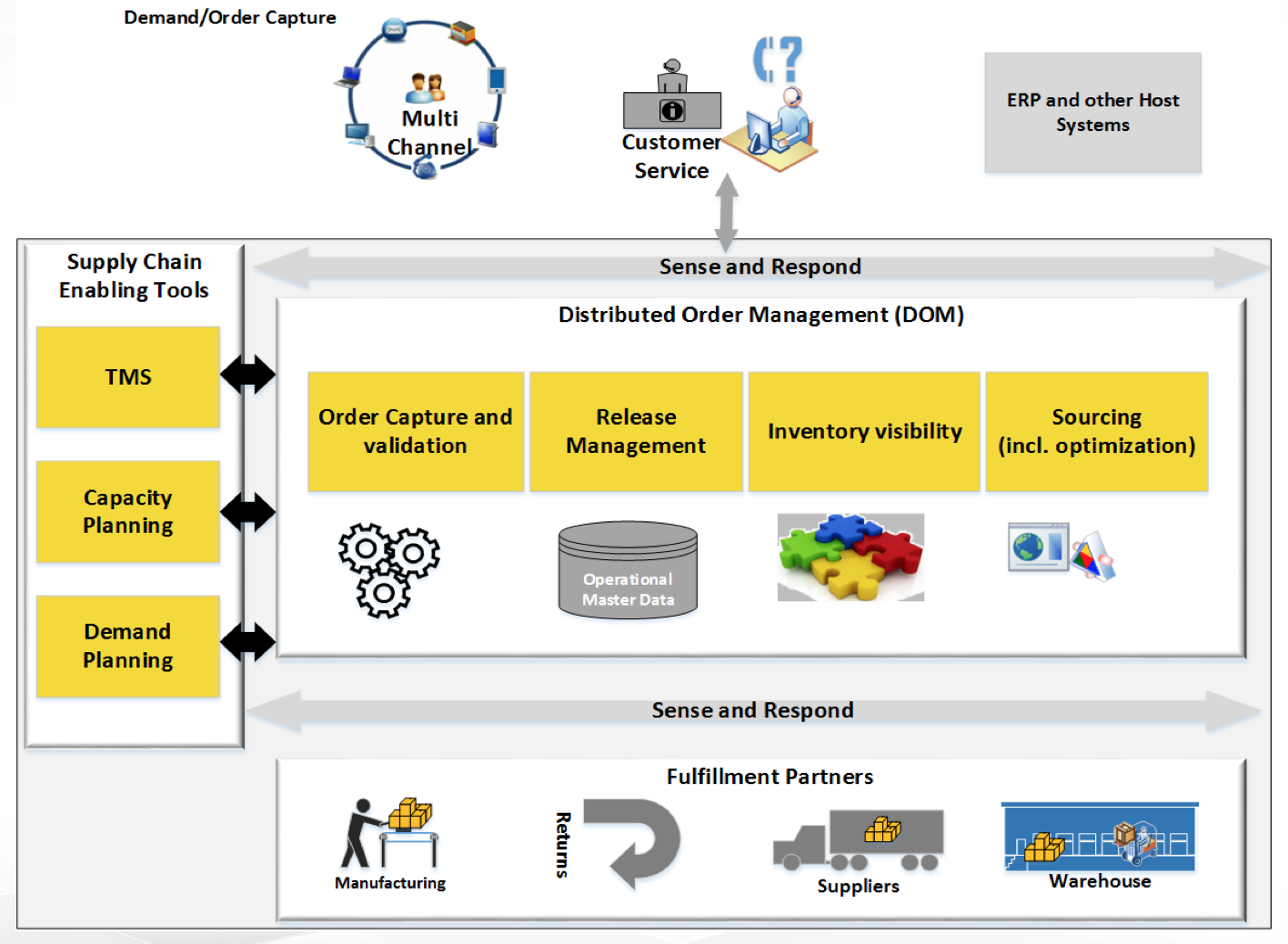
The WMS sits in the middle of your technology stack — ERP, order management, transportation management, e-commerce platforms, and every piece of automation on the floor. Softeon’s Distributed Order Management (DOM) solution is one example of how a WMS vendor can extend integration across channels. Robust, well-documented APIs and a track record of fast, clean integrations matter as much as any single feature, because this is what determines your actual time to value and your ongoing agility.
Cloud architecture and scalability
Cloud-native, multi-tenant architecture supports easier upgrades, faster scaling across sites, and lower infrastructure overhead. Confirm whether “cloud” means true cloud-native or a hosted version of an on-premise architecture — the distinction affects upgrade cadence and total cost of ownership.
Configurability without custom code
Every operation eventually needs workflows that don’t match the vendor’s default. The best platforms — Softeon calls this “micro-tuning” — let you configure precise, unique workflows per zone, client, or channel, so you get a precise fit without inheriting a maintenance burden every time you upgrade.
Key evaluation criteria: what to prioritize
When you compare platforms, weigh these criteria against your operation and your growth plans — they’re what separates systems that scale with you from systems you’ll be replacing again in three years.
- Fit for your complexity, not just your size. A WMS should be evaluated against your actual mix of channels, SKU types, and automation — not a generic feature checklist that looks identical across vendors.
- Depth of automation and robotics integration. Confirm the integration approach (vendor-agnostic middleware vs. point-to-point) and ask for reference customers running the same automation vendors you use or plan to use.
- Labor management depth. Determine whether you need basic productivity reporting or engineered labor standards, and confirm which tier the vendor actually delivers natively.
- 3PL and multi-entity support, if relevant — client billing, segregation, and configurability per client.
- Cloud maturity and upgrade model. Evergreen cloud platforms reduce the pain and cost of staying current; legacy architectures re-hosted in the cloud often still carry disruptive upgrade cycles.
- Integration ecosystem. How cleanly does the WMS connect to your ERP, OMS, TMS, and e-commerce stack, and how is that integration maintained over time?
- Configurability vs. customization. Can the vendor tailor workflows to your operation through configuration, or does every unique requirement become custom code you have to maintain?
- Embedded AI grounded in real operational data. Is AI acting on live inventory, labor, and order data with context and auditability — or is it a bolt-on feature with limited practical use?
- Total cost, implementation time, and risk. What’s the realistic time to value, and does the vendor have a proven methodology and reference customers with an operation like yours?
Composable and Tier-1 vs. rigid legacy vs. point solutions
Most WMS evaluations eventually come down to one architectural question: do you want a single, composable Tier-1 platform that flexes to your operation, a rigid legacy system that forces your operation to flex to it, or a patchwork of point solutions stitched together with integrations?
| Consideration | Composable Tier-1 WMS | Rigid legacy WMS | Point solutions stitched together |
| Core strength | Configurable workflows per zone, client, or channel on one platform; deep automation integration | Proven core functionality, often heavily customized over years | Deepest functionality in one narrow area (e.g., labor-only or yard-only tools) |
| Fit to operation | High — designed to be tuned to your specific processes | Low to moderate — you often adapt your process to the software | Variable — strong in the one area each tool covers |
| Upgrade path | Evergreen cloud, lower disruption | Often disruptive; custom code breaks on upgrade | Each tool upgrades independently; integrations can break |
| Automation/robotics integration | Native, vendor-agnostic integration layer | Frequently retrofitted, higher integration cost | Requires separate middleware or manual reconciliation |
| Main risk | Newer entrants may have less market history | Technical debt and slow time-to-value on change | Fragmentation, duplicate data, and “which system is right” disputes |
| Best used for | Operations with real complexity and automation, or that expect to grow and change | Stable, low-change operations with deep customization sunk cost | Operations solving one specific, narrow gap |
For most mid-size to large operations — and virtually all 3PLs — a composable, Tier-1 platform with genuine configurability is the pragmatic center of gravity: you get proven, enterprise-grade core functionality without inheriting either the rigidity of an aging legacy system or the fragmentation of a dozen best-of-breed tools.
The vendor landscape
The WMS market spans a small number of Tier-1 enterprise vendors, a set of Gartner-recognized Visionaries and Niche Players with strong specific strengths, and a long tail of point solutions and industry-specific tools. Gartner’s 2026 Magic Quadrant for Warehouse Management Systems evaluates vendors on Completeness of Vision and Ability to Execute, and this year’s report places particular emphasis on cloud-native, composable architecture, AI and automation readiness, and usability.
Platforms commonly shortlisted
- Tier-1 / Gartner Leaders: Manhattan Associates, Blue Yonder, Oracle Fusion Cloud Warehouse Management, SAP Extended Warehouse Management, Infor WMS, and Made4net — vendors with long track records at enterprise scale.
- Focused Tier-1 / Gartner Visionaries: Softeon and Logistics Reply — vendors recognized for strategic vision and innovation, often distinguished by depth of focus purely on warehouse and fulfillment operations rather than a broader, less specialized software suite.
- Point solutions and narrower platforms: vendors focused primarily on a single warehouse type (e.g., small-parcel e-commerce fulfillment) or a single capability (labor-only, yard-only), often a good fit for simple operations but limited for complex, multi-channel, or highly automated ones.
Vendor comparison overview
The table below reflects how these platforms are typically characterized in enterprise evaluations. Ratings are directional and reflect common market positioning, not an endorsement — validate against your own requirements, demos, and references.
| Platform | Category | Primary positioning | Depth of warehouse focus | Automation/robotics integration |
| Softeon/IFS Softeon | Focused Tier-1 WMS, Gartner Visionary | The only Tier-1 vendor exclusively focused on warehouse and fulfillment operations, known for “micro-tuning” configurability and integrated WES | Singular — warehouse and fulfillment only | Native, vendor-agnostic integration layer |
| Manhattan Associates | Tier-1, Gartner Leader | Cloud-native, unified distribution/logistics platform for large omnichannel retail networks | Broad supply chain suite | Strong, especially at enterprise retail scale |
| Blue Yonder | Tier-1, Gartner Leader | AI-driven, end-to-end supply chain platform tightly linked to planning and merchandising | Borad supply chain suite | Strong, mature integration ecosystem |
| Oracle Fusion Cloud WMS | Tier-1, Gartner Leader | Modern SaaS WMS for organizations on Oracle Fusion Cloud or NetSuite | Part of broader ERP/SCM suite | Strong, especially multi-site/multi-client |
| SAP Extended Warehouse Management | Tier-1, Gartner Leader | Deep integration for organizations already running SAP S/4HANA | Part of broader ERP suite | Strong for global, complex, automated sites |
| Infor WMS | Tier-1, Gartner Leader | Configurable, multi-tenant cloud WMS with strength in labor and 3D visualization | Part of broader ERP portfolio | Strong |
| Made4net | Tier-1, Gartner Leader | Supply chain execution platform with 11 consecutive years of Leader recognition | Broad SCE suite | Strong |
| Logistics Reply | Gartner Visionary | Intelligent, flexible warehouse execution for enterprise operations | Warehouse execution focus | Strong, innovation forward |
Where IFS Softeon fits and its boundaries
Because this guide is published by Softeon, it’s worth being direct about where Softeon fits and where it doesn’t. Softeon is the only Tier-1 WMS vendor whose focus is exclusively warehouse and fulfillment operations — unlike Tier-1 competitors that spread WMS across a much broader supply chain planning, ERP, or merchandising suite. That focus shows up as “micro-tuning”: the ability to configure precise, unique workflows per client, zone, or channel without forcing your operation into a generic template, backed by an integrated Warehouse Execution System (WES) that orchestrates labor, robotics, and automation in real time, and an Elastic Communicator integration layer built to be vendor-agnostic across material handling equipment and robotics providers.
Softeon is transparent about scope, too. Its labor management is solid for productivity tracking and reporting but is not a substitute for a dedicated, engineered labor-standards system if that’s a hard requirement. Its parcel management handles rating, carrier compliance, and label generation well, but advanced multi-carrier rate shopping is typically better served through integration with a dedicated TMS. Buyers whose primary requirement is a single, all-in-one enterprise suite spanning finance, HR, and manufacturing alongside the warehouse should evaluate Tier-1 ERP-anchored WMS options; buyers who want the deepest possible warehouse and fulfillment fit — especially in retail, omnichannel, 3PL, healthcare, or food and beverage — are Softeon’s core strength. See Softeon’s case studies for examples of how these operations put the platform to work.
Capability alignment matrix
Use this matrix as a starting framework, then replace the ratings with your own scored findings from demos and reference calls.
| Capability | IFS Softeon | Manhattan | Blue Yonder | Oracle | SAP | Infor |
| Real-time inventory & license-plate tracking | Native | Native | Native | Native | Native | Native |
| Vendor-agnostic automation/robotics integration | Native | Strong | Strong | Strong | Strong | Strong |
| Configurable workflows without custom code (“micro-tuning”) | Native | Available | Available | Available | Config-dependent | Available |
| Integrated WES / orchestration | Native | Available | Available | Available | Available | Available |
| 3PL multi-client billing & segregation | Strong (≈40% of customers are 3PLs) | Available | Available | Available | Available | Available |
| Engineered labor standards | Basic reporting | Available | Available | Available | Available | Strong |
| Broader ERP/planning/merchandising suite | Not offered (singular WMS/WES focus) | Broad | Broad | Broad | Broad | Broad |
| AI-driven slotting and workflow automation | Available | Available | Strong | Available | Available | Available |
Legend: Native/Strong = delivered directly and central to the platform’s design; Available = supported, may be module- or configuration-dependent. These are directional — confirm current capabilities directly with each vendor.
The role of AI and agents in the modern WMS
AI is now part of every WMS conversation, and it’s easy for vendors to over-promise. The important principle for buyers: AI is only as good as the operational data it acts on. A governed WMS that already tracks real-time inventory, labor, and order status is what allows AI to make a genuinely useful recommendation — not a generic one. Softeon’s AI Layer (SAIL) is one example of AI built directly on top of a governed WMS data model.
Three levels of AI to look for
- Embedded AI (the foundation). Practical, in-workflow assistance — AI-driven slotting recommendations, demand-aware replenishment, exception surfacing, and intelligent labor allocation based on live conditions on the floor.
- Agents and automated decisioning. Software that carries out defined, high-volume tasks where WMS data provides trustworthy context — dynamically re-sequencing picks around a labor shortage, adjusting wave release based on real-time dock conditions, or auto-resolving common exceptions.
- AI-native process reinvention. The emerging frontier — using the WMS’s real-time data substrate to rethink workflows rather than just automate the existing screen, such as predictive slotting ahead of seasonal demand shifts or autonomous coordination between WMS and robotics fleets.
How to test AI claims in a demo
- Ask what data the AI acts on, and whether it’s your live operational data or a static/offline model.
- Ask what’s generally available today versus roadmap, and get it in writing.
- Ask for a specific, high-volume task the vendor can demonstrate end-to-end, including what happens when the system is uncertain.
KPIs to measure WMS success
Tie your business case to measurable outcomes, baseline them before go-live, and track improvement afterward.
| Process area | KPI | What it measures |
| Inventory | Inventory accuracy / cycle count variance | How closely system counts match physical counts |
| Receiving | Dock-to-stock time | Time from receipt to putaway completion |
| Slotting | Pick path efficiency / travel time per pick | Distance and time traveled per unit picked |
| Order fulfullment | Order accuracy/on-time ship rate | % of orders shipped complete, correct, and on time |
| Labor | Units per labor hour / productivity vs. engineered standard | Throughput relative to workforce and standard |
| Automation | Automation utilization/uptime | % of automated capacity actually used and available |
| 3PL operations | Client onboarding time / billing accuracy | Speed of bringing on new clients; accuracy of client invoicing |
| Customer experience | Perfect order rate | % of orders delivered complete, on time, and damage-free |
Implementation cost and risk
Why WMS implementations fail — and how to de-risk them
- The software wasn’t built for your complexity. A generic system forced onto a high-SKU, multi-channel, or highly automated operation is the most common root cause of disappointment. Prioritize fit over brand familiarity.
- It was treated as an IT project, not an operations transformation. Success requires ownership from operations and warehouse leadership, not just IT.
- The organization under-invested in change management. Backfill key roles, involve floor supervisors in demos, and plan training time realistically.
- Integration scope was underestimated. Automation, robotics, ERP, OMS, and TMS integrations are where timelines most often slip — scope them in detail during discovery, not after signing.
- Regional or multi-client requirements surfaced late. Capture 3PL billing rules, multi-entity needs, and regional compliance requirements up front.
Understanding cost
WMS is typically licensed as a cloud subscription priced by module, site, or user, plus implementation services. Implementation cost is driven by the number of sites, the complexity of integrations (especially automation and robotics), data migration, and the degree of process standardization required. Request a total-cost-of-ownership view across software, services, integration, and internal effort over at least three to five years, and weigh it against realistic time to value.
Evaluation checklist and RFP questions
Fit for your operation
- What is our mix of channels, SKU types, and automation today — and in three years — and how does each shortlisted platform support it?
- If we’re a 3PL: how does the platform handle client-level billing, segregation, and configurability per client?
Functional depth
- How deep is labor management — basic productivity reporting, or engineered labor standards?
- Can workflows be configured per zone, client, or channel without custom code that we have to maintain across upgrades?
- How does the system handle wave/waveless picking, task interleaving, and dynamic re-slotting?
Integration and architecture
- Is automation and robotics integration handled through a vendor-agnostic layer, or point-to-point connections we’ll need to re-engineer with each new automation partner?
- How cleanly does the platform integrate with our existing ERP, OMS, TMS, and e-commerce stack?
- Is this a true cloud-native architecture, and what does the upgrade cadence actually look like?
AI and raodmap
- What data does the AI act on, and is it generally available today versus roadmap?
- Can you demonstrate a specific, high-volume automated task end-to-end, including the exception path?
Delivery and proof
- What’s the realistic implementation timeline for an operation of our size and complexity?
- Can you connect us with reference customers running similar automation, similar channel mix, or a similar 3PL/multi-client model?
WMS terminology glossary
For a fuller reference, see Softeon’s WMS Glossary.
- License plate. A unique identifier (often a barcode) assigned to a unit load — pallet, case, or tote — used to track it through every movement in the warehouse.
- Wave picking vs. waveless picking. Wave picking releases orders in scheduled batches; waveless picking releases work continuously based on real-time priority and resource availability.
- Task interleaving. Combining multiple task types (e.g., putaway and picking) into a single labor motion to reduce unproductive travel.
- Slotting. Assigning inventory to storage locations based on velocity, size, or handling requirements to minimize travel and maximize space use.
- Cross-docking. Moving inbound goods directly to outbound shipping with minimal or no storage in between.
- WES (Warehouse Execution System). A rules-based orchestration layer that sits between the WMS and the floor, routing work in real time across labor and automation.
- Composable / micro-tuning. The ability to configure precise, unique workflows for a specific client, zone, or channel without custom code that breaks on upgrade.
- Multi-tenant. A cloud architecture where multiple clients or business units run on a shared platform with logically separated data — key for 3PLs.
- Engineered labor standards. Time standards for specific tasks derived from detailed time studies, used to measure and incentivize productivity precisely.
- Elastic/vendor-agnostic integration layer. Middleware designed to connect a WMS to many different automation and robotics vendors without requiring a custom build for each one
Frequently asked questions (FAQ)
The core capabilities to prioritize are real-time inventory visibility and control, automated receiving and directed putaway, slotting and space optimization, flexible order management with wave/waveless picking and task interleaving, labor management, yard management, embedded parcel and shipping execution, vendor-agnostic integration with automation and robotics, multi-client/3PL support if relevant, real-time reporting and analytics, and a genuinely configurable, cloud-native architecture. Beyond features, weigh integration
A WMS is the system of record for inventory, orders, and warehouse processes. A WES (Warehouse Execution System) is the real-time orchestration layer that sits between the WMS and the floor, routing work across labor and automation as conditions change. Many operations run both together, and some Tier-1 vendors — including Softeon — offer them as an integrated combination.
Yes. Cloud-native architecture typically means faster scaling across sites, lower infrastructure overhead, and a smoother, less disruptive upgrade cadence than a legacy system re-hosted in the cloud. Confirm which one you’re actually being sold — the distinction affects total cost of ownership significantly.
It’s now one of the top evaluation criteria, not a secondary one. With the rapid growth of robotics, AS/RS, and goods-to-person systems, a WMS with a vendor-agnostic integration layer avoids the cost and delay of custom-building a new connection every time you add an automation partner.
3PLs should prioritize multi-client billing, inventory segregation by client, configurable rules per client, and reporting that can be shared externally without manual rework. These capabilities are often under-delivered by WMS platforms built primarily for single-owner operations, so validate them specifically in demos with your actual client scenarios. See how Softeon supports Third-Party Logistics operations for reference.
AI adds the most value when it’s grounded in real, governed operational data — live inventory, labor, and order status. Look for three levels: embedded AI that assists with slotting and exception handling; agents that automate defined, high-volume tasks like dynamic pick re-sequencing; and emerging AI-native reinvention of workflows like predictive seasonal slotting. Always separate what’s generally available today from roadmap claims.
Timelines vary with the number of sites, degree of automation, and integration complexity, so validate per vendor. Implementations most often struggle when the software wasn’t built for the operation’s actual complexity, when it’s treated purely as an IT project, when change management is under-resourced, or when integration and multi-client requirements surface late in the process.
There’s no single best WMS — the right choice depends on your channel mix, automation level, multi-client requirements, and existing technology stack. Tier-1 ERP-anchored platforms (SAP, Oracle, Infor) suit organizations standardizing around a single enterprise suite; broad supply-chain-suite vendors (Manhattan, Blue Yonder) suit large omnichannel networks; and focused Tier-1 vendors like Softeon suit operations — especially retail, omnichannel, and 3PL — that want the deepest possible warehouse and fulfillment fit without inheriting an unrelated enterprise suite. Score each option against the criteria in this guide for your specific requirements.
About this guide. This buyer’s guide is provided by Softeon to help operations, supply chain, and IT leaders evaluate warehouse management system software objectively. It describes vendors and categories as they are commonly positioned in the market, including Gartner’s 2026 Magic Quadrant for Warehouse Management Systems; it is not a substitute for your own requirements analysis, demos, reference checks, or professional advice. Vendor capabilities change — validate current details directly with each provider. Gartner does not endorse any vendor, product, or service depicted in its research publications and does not advise technology users to select only those vendors with the highest ratings.
Ready to see how Softeon’s Tier-1 WMS fits your operation? Contact Softeon to talk to our team, or explore the WMS platform in more detail.