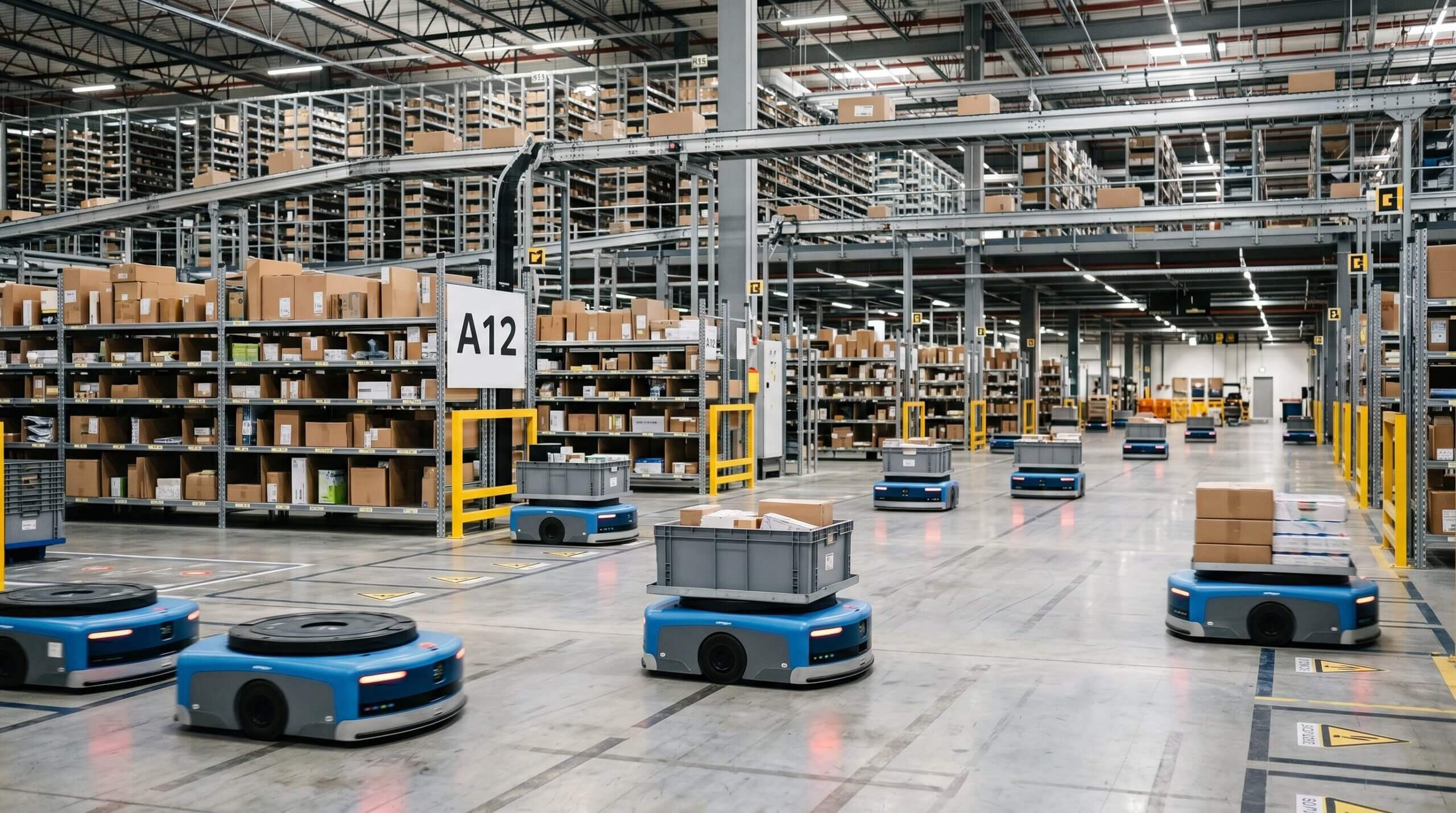
Every warehouse has days when everything just clicks. Trucks unload on time, waves release at the right moment, pickers never wait on replenishment, and the last trailer pulls away with time to spare.
Those days aren’t luck. They happen when every part of the building works with every other part. Inbound knows what outbound needs. Labor is where the work is. Automation isn’t waiting on people, and people aren’t waiting on automation. That’s flow.
When we started building Fulfillment Flow, the question we asked was simple: what would it take to have more of those days?
Great decisions come from the whole picture
We worked through that question alongside some of our largest customers, and the answer kept coming back to context. The best decisions on the floor aren’t the ones that optimize a single area. They’re the ones that account for how each area affects the next.
Replenish a pick zone when the labor is there to work it. Release a wave when the downstream buffer has room for it. Small calls like these add up to a building that moves.
Context is also how you earn trust. When a recommendation reflects what a warehouse manager can see with their own eyes, they act on it. That’s the standard we set for Fulfillment Flow.
Start with how a warehouse manager thinks
A good ops manager doesn’t watch one number. They carry the whole building in their head. It sounds something like this:
“This building runs cold. I know how a blockage here cascades to outbound. Cutoff in 90 minutes for my biggest customer. Two short in outbound. GTP cell at 60%.”
That’s the picture they run every minute of a shift. If a digital worker is going to be useful, it has to carry the same picture.
So we broke that mental model into six intelligence pillars: the facility itself, live operations, adjacencies between areas, site goals like cutoffs and service levels, the associates available right now, and the state of the automation. Every digital worker in Fulfillment Flow is built on all six, from inbound and wave management to labor, automation, slotting and replenishment, and outbound. Same foundation, tuned to a different job. Every worker we add will be built the same way.
“Best” changes through the shift
Here’s the part that’s easy to miss. Most of those pillars describe things that stay fairly fixed. Live operations doesn’t, and neither does what “best” means.
At 7:00 a.m., best might mean clearing the overnight queue before the floor fills up. By 11:30, it might mean protecting a 1:00 p.m. VIP cutoff, even if throughput dips. At 3:15, it might mean not burning out the closing shift for a number that won’t matter tomorrow.
A rules engine can’t keep up with that, and neither can a single-metric agent. Fulfillment Flow reads all six pillars against what the operation is trying to achieve right now, and keeps reading them as conditions change.
Two jobs at once
Every digital worker carries a dual mandate: do the job well, and make the operation better.
The first is real expertise. It knows this facility’s actual configuration instead of following generic rules. The second is what separates it from a bot. It checks cutoffs, people and machines before it acts, and it holds back or adjusts when the bigger picture says so.
What that looks like at 1:45 p.m.
Take the wave management agent. It’s 1:45. Cutoff is 3:30. The goods-to-person north cell is running at 60%, with throughput 25% below baseline. Zone 3 is two associates short. And there’s a VIP order in the wave.
A narrow agent sees a wave ready to go and releases it. Fulfillment Flow sees more. Zone 3 sits downstream, so a full release would saturate the buffer. Two people short means a big wave turns into a queue, not throughput. The degraded cell can’t absorb the volume. And the VIP cutoff isn’t negotiable.
So the recommendation is to release the VIP sub-wave now, alert labor to cover Zone 3, and hold the full wave until the GTP cell is back above 80%. One decision, shaped by all six pillars.
The manager stays in charge
That recommendation goes to a person. The digital workers behave like experienced area supervisors, flagging what they see to a central operational agent that looks after flow across the whole facility. That agent works as a partner to the warehouse manager, suggesting how to respond. The manager sets priorities and makes the call.
That’s deliberate. Trust is earned by showing your reasoning and getting it right, shift after shift, not by taking decisions away from the people accountable for the floor.
It gets better every shift
Fulfillment Flow doesn’t start each shift from zero. Every digital worker observes, reasons and acts, then feeds what it learned back into the pillars so every other worker benefits.
That compounds. Bottlenecks get spotted earlier from one shift to the next. The wave agent knows first when another area is struggling. Lessons from one site carry into the next one.
It works because Fulfillment Flow is built from the WMS data model up, not bolted on. Configuration, live operations, labor and automation all feed one intelligence layer, so the context is native rather than stitched together after the fact.
Flow, not just speed
For years, warehouse technology has chased speed. Faster picks, faster waves, faster decisions. Speed still matters. But a fast decision that ignores what’s happening two zones over just moves the problem somewhere else.
What operations need is flow: every part of the building working with the others and adjusting as the day changes. That’s what adaptive operations look like on the floor, and it’s why we built Fulfillment Flow the way we did.
Be the first to know
Fulfillment Flow is coming, and we’re having early conversations now with operations leaders who want to be first in line. Send us a message to start the discussion.