

A warehouse management system (WMS) can remain operational for years, or even decades. But just because your WMS still works doesn’t mean it’s keeping up with your business.
Warehouse operations have changed dramatically. Automation and robotics are becoming more common. Labor remains a challenge. Customer expectations continue to increase. Artificial intelligence is creating new opportunities to optimize operations. And warehouses are generating more operational data than ever before.
Legacy warehouse technology can make responding to these changes increasingly difficult.
So, how do you know when your WMS is outdated?
Here are five signs it may be time to modernize your warehouse management system.
1. Every Business Change Requires Custom Development
One of the clearest signs of an outdated WMS is how difficult it is to make changes.
Adding a customer, modifying a workflow, introducing a new fulfillment process, or changing a user interface shouldn’t require a major development project every time.
Warehouses change constantly. Your technology needs to change with them.
Modern WMS platforms increasingly provide configuration and extensibility capabilities that allow organizations to adapt processes without modifying core application code.
This is especially important for third-party logistics providers, where onboarding new customers quickly can directly impact revenue.
The warning sign: Your operation knows what needs to change, but your technology can’t keep up.
2. Adding Automation Creates More Complexity
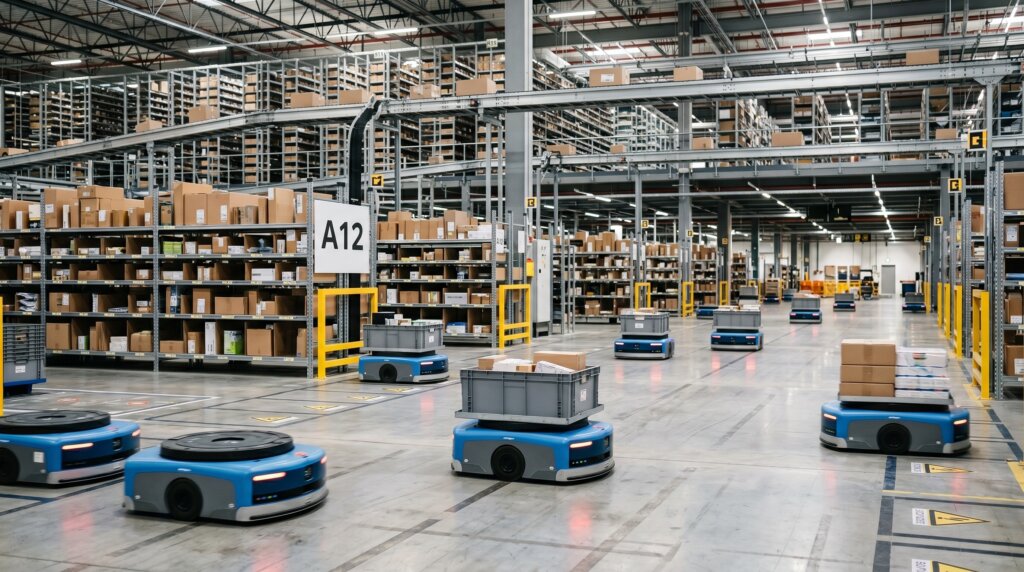
Robotics and warehouse automation can dramatically improve productivity, but only when they work together effectively.
Many warehouses now operate multiple types of automation, from autonomous mobile robots (AMRs) and automated storage and retrieval systems (AS/RS) to conveyors, sortation systems and goods-to-person technologies.
If every new automation technology requires another standalone integration or creates another operational silo, the WMS may be limiting your automation strategy.
Modern warehouse technology should help orchestrate work across people and machines, dynamically determining how orders and tasks should move through the operation.
The warning sign: You’re adding automation but also adding more systems, integrations and operational complexity.
3. You Can See What Happened but Not What’s Happening
Traditional warehouse reporting often focuses on historical performance.
How many orders shipped yesterday? How productive was the workforce last week? Where did service levels fall short?
Those questions remain important, but today’s operations increasingly require visibility into what is happening right now.
Modern warehouse platforms can generate enormous volumes of operational events across inventory, orders, labor, automation and equipment. Capturing and analyzing that information can help organizations identify bottlenecks and risks before they impact customers.
The warehouse is moving from historical reporting toward real-time operational intelligence.
The warning sign: You usually discover operational problems after they have already affected performance.
4. Your WMS Manages Transactions Instead of Orchestrating Operations
Receiving. Putaway. Replenishment. Picking. Packing. Shipping.
These are fundamental WMS capabilities, but they are no longer enough.
Modern warehouse environments require constant coordination between orders, inventory, workers, automation and customer priorities.
That is driving the evolution from traditional warehouse management toward warehouse orchestration.
Instead of simply telling individual resources what to do, orchestration considers what is happening across the operation and continuously determines how work should be prioritized and executed.
The warning sign: Your WMS executes processes but can’t dynamically coordinate the resources responsible for them.
5. AI Is Something You Have to Add Around Your WMS
Artificial intelligence is quickly becoming part of enterprise and warehouse technology strategies.
But organizations should ask an important question: How accessible is warehouse operational data to AI?
AI has the potential to help employees find information, identify anomalies, accelerate configuration, optimize decisions and predict operational problems.
That becomes much harder when warehouse data is fragmented, difficult to access, or locked inside legacy systems.
Modern warehouse platforms should provide the data foundation and architecture necessary to support AI as it becomes increasingly embedded in warehouse operations.
The warning sign: Your AI strategy depends on working around your WMS rather than working with it.
When Should You Replace Your WMS?
An organization should consider replacing or modernizing its WMS when the system begins limiting its ability to change, scale, automate or improve operations.
That doesn’t necessarily mean replacing a system simply because of its age.
The bigger question is whether your WMS can support where your business is going next.
If operational changes require extensive customization, automation is becoming increasingly difficult to integrate, real-time visibility is limited, or your architecture makes it difficult to take advantage of AI, those may be signs that modernization should be considered.
Building an Adaptive Warehouse with IFS Softeon
At IFS Softeon, we believe the future of warehouse management is about more than executing transactions.
It’s about creating warehouse operations that can continuously adapt.
IFS Softeon combines tier-1 warehouse management with intelligent warehouse execution and orchestration, flexible Enablement Tools, real-time operational visibility and AI capabilities designed for increasingly complex warehouse environments.
Together with IFS and its Industrial AI capabilities, we’re helping organizations connect what happens on the warehouse floor with the broader supply chain and enterprise.
Is Your WMS Ready for What’s Next?
If any of these signs sound familiar, it may be time to take a closer look at your warehouse technology. Talk to an IFS Softeon expert about where your operation is today, where it needs to go, and how an adaptive warehouse platform can help you get there.