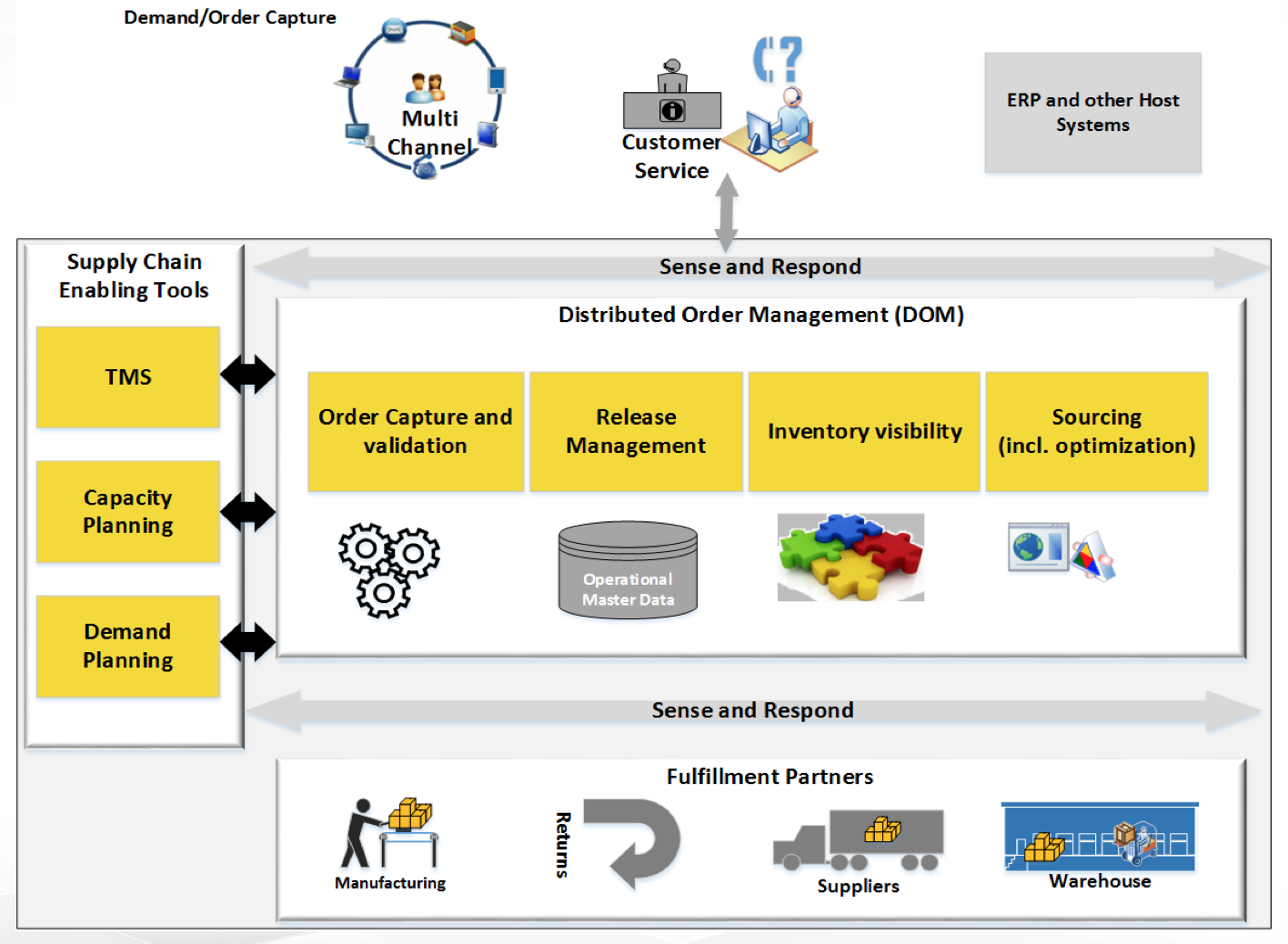
Inventory management is a foundational capability for product-centric organizations, balancing availability, cost, and speed to meet customer commitments. Whether you manufacture, distribute, or service products, getting inventory right influences order fill rates, cash tied up in stock, production stability, and the resilience of your supply chain. This guide explains what is inventory management?, how it works, proven methods and metrics, the benefits and risks, enabling technologies, and practical steps to improve performance at scale. If you are wondering what is inventory management? at a practical level, think of it as the playbook that turns demand into accurate, timely stock movements—without overspending.
What is inventory management?
Inventory management is the planning, control, and optimization of goods across your network to meet demand at the lowest total cost. The goal is to have the right products, in the right quantities, in the right locations, at the right time—while minimizing working capital, storage and handling costs, and waste. Effective inventory management balances three priorities: high service levels and fill rates, low carrying costs, and efficient operations in receiving, storage, and fulfillment.
Organizations typically manage several categories of inventory:
- Raw materials: Inputs used in production, sourced from suppliers or extraction processes.
- Work-in-progress (WIP): Goods partway through manufacturing, including subassemblies and components.
- Finished goods: Products ready for sale or shipment to customers and channels.
- MRO supplies: Spare parts, tools, and consumables required to keep equipment and facilities running.
Inventory management connects demand planning and forecasting to procurement and production, orchestrates warehouse operations, and informs logistics and customer service. Finance relies on accurate inventory to value assets and manage cash flow, while operations depend on it to stabilize schedules and reduce lead times. When these functions are aligned around shared service and cost objectives, decisions become faster, more consistent, and easier to audit. In short, if someone asks what is inventory management system capability in your business, it is the end-to-end method that ties these teams and data together.
How inventory management works
Strong inventory management turns demand signals into timely, accurate stock movements through a set of core processes:
- Demand forecasting: Use historical sales, seasonality, promotions, and market data to project demand and inform replenishment and production plans.
- Replenishment planning: Determine what to order or make and when, using target service levels, lead times, order quantities, and safety stock.
- Receiving and putaway: Validate inbound stock, ensure quality, update system balances, and place items in designated locations for fast retrieval.
- Storage: Slot inventory by velocity, size, and handling requirements to reduce travel time and protect product integrity.
- Picking, packing, and shipping: Execute orders accurately and efficiently with methods such as batching, zone picking, waves, or automation to increase throughput.
Performance is monitored with metrics and KPIs that provide visibility and control:
- Inventory turnover: Cost of goods sold divided by average inventory; indicates how frequently stock cycles. Higher is better if service is maintained.
- Days of inventory on hand (DIO/DOH): Average days required to sell current inventory, highlighting capital committed and obsolescence risk.
- Fill rate (order, line, unit): Percentage of demand fulfilled from available stock; a direct measure of service.
- Carrying cost of inventory: Annual cost to hold stock, including capital, storage, insurance, taxes, shrinkage, and obsolescence.
Cross-functional coordination is essential. Procurement aligns supplier lead times, minimum order quantities, and agreements with planning policies. Production schedules reflect actual demand and constraints such as capacity and changeovers. Sales and customer service share promotion plans and demand signals. Finance sets working capital targets and evaluates trade-offs between inventory levels and service outcomes. Clean master data and governed workflows ensure decisions remain consistent and traceable. If you are defining what is inventory control versus broader planning, this is where the line is drawn—planning spans the network, while control keeps execution tight inside facilities.
Inventory management methods and techniques
Organizations combine foundational and advanced approaches to match product characteristics, demand patterns, and service goals.
Common approaches
- Just-in-time (JIT): Synchronize supply with demand and production to reduce buffers. Requires dependable suppliers and stable, short lead times.
- Safety stock: Buffer against demand variability and supply uncertainty, calculated using service targets, forecast error, and lead-time variability.
- Reorder point (ROP): The inventory level that triggers replenishment, typically demand during lead time plus safety stock.
- Economic order quantity (EOQ): Formula-based order size that minimizes the sum of ordering and carrying costs, best for stable demand and costs.
Counting and classification techniques
- ABC analysis: Classify SKUs by value or velocity to apply differentiated controls and review frequencies.
- Cycle counting: Ongoing sampling of inventory accuracy within daily operations, emphasizing high-value or high-risk items.
- Perpetual vs. periodic inventory: Perpetual systems update balances with each transaction; periodic methods reconcile at intervals. Perpetual models support tighter control and analytics.
Advanced strategies
- SKU rationalization: Streamline assortments by removing low-value or redundant items to simplify planning and reduce carrying costs.
- Lot-sizing rules: Apply methods such as lot-for-lot, fixed order quantity, min-max, or dynamic algorithms to align supply with demand profiles.
- Consignment inventory: Supplier-owned stock at the buyer’s site to improve availability while shifting capital requirements upstream. Requires clear terms and consumption tracking. This is closely related to what is vendor managed inventory in practice, where the supplier plans replenishment based on shared demand signals. When someone asks what is vendor managed inventory again, remember that the supplier takes on more planning responsibility to keep shelves full.
Why inventory management matters: benefits and risks
When inventory is right-sized and well controlled, the gains are measurable and compounding across financial, operational, and customer outcomes.
Benefits
- Improved cash flow: Reducing average inventory lowers working capital needs, releasing cash for growth and operational investment.
- Fewer stockouts: Better forecasts, tuned safety stocks, and timely replenishment sustain service levels and prevent lost sales.
- Higher customer satisfaction: Reliable availability and on-time delivery build loyalty, reduce returns, and strengthen brand reputation.
- Lower waste and cost: Less obsolescence, damage, and shrinkage; more efficient handling and space utilization; optimized freight through planned replenishment.
Risks and red flags
- Obsolete or slow-moving inventory: Items that stall tie up capital and risk write-offs. Monitor aging reports and last-movement dates.
- Overstocks and bullwhip effects: Overreacting to demand spikes or forecast errors can inflate buffers across the network.
- Poor data accuracy: Incorrect on-hand balances, locations, or units of measure degrade planning and warehouse execution.
- Long or variable lead times: Unreliable supply introduces shortages and surplus buffers. Collaborate with suppliers to reduce variability.
Good practices also support compliance and sustainability. Accurate traceability and batch/lot control help meet regulatory requirements in aerospace and defense, food and beverage, and life sciences. Reducing obsolete stock and improving forecast accuracy cut waste and emissions from expedites. Optimized packaging, right-sized shipments, and network design further reduce environmental impacts while preserving service.
Inventory technologies and systems
Modern inventory performance relies on connected systems that provide real-time visibility, robust controls, and predictive analytics across sites and channels. If you are evaluating what are inventory management systems and what is inventory management software, focus on how they supportconsistent data, fast execution, and clear accountability across your operations.
Core capabilities
- Real-time visibility: Perpetual balances across plants, warehouses, stockrooms, and field locations with multi-unit-of-measure and serial/lot tracking.
- Master data management: Clean item masters, bills of materials, supplier records, and location hierarchies with governance for changes and approvals.
- Integrations: Seamless data flow across ERP, manufacturing execution (MES), warehouse management (WMS), transportation management (TMS), e-commerce, and supplier portals. When exploring what are warehouse management systems, look for tight integration with upstream planning and downstream logistics.
Automation and data capture
- Barcode scanning: Fast, accurate capture for receiving, picking, cycle counts, and transfers.
- RFID: Hands-free identification and location tracking for pallets, bins, or high-value items.
- IoT sensors: Real-time monitoring of conditions, bin levels, and equipment status to trigger replenishment and assure quality.
- Mobile devices and wearables: Guided workflows that accelerate training and boost productivity.
Analytics and forecasting
- Demand planning: Statistical forecasting that incorporates seasonality, promotions, new product introductions, and causal drivers.
- Scenario modeling: What-if analyses for lead-time shifts, supplier constraints, and service targets to quantify trade-offs.
- Inventory optimization: Algorithms that set safety stocks, reorder points, and placement across the network to minimize cost at a target service level.
It is common to hear overlapping terms. If you are asking what is inventory software versus what is inventory management software, think scope and depth: the former can be simple tools for tracking counts, while the latter covers planning, replenishment, and analytics. Similarly, what are inventory management systems may include ERP, WMS, and specialised planning engines working together. And when you see what is stock management system in job specs or RFPs, it typically refers to the same core capability set—tracking, planning, and reporting—across your SKU portfolio.
How to improve inventory management: practical steps
Consistent progress comes from disciplined processes, clear accountability, and trustworthy data. Strengthen accuracy and control first, then scale into advanced analytics and automation. If your team is clarifying what is inventory control, anchor it on execution inside your facilities. If they are defining what is inventory management system needs, anchor it on planning and visibility across sites and partners.
Operational improvements
- Implement cycle counting: Count A items daily or weekly, B items monthly, and C items quarterly. Investigate root causes for discrepancies and close process gaps.
- Standardize processes: Document receiving, putaway, picking, and shipping. Use checklists, location labels, and quality gates to reduce variation.
- Improve lead-time data: Measure actual supplier and manufacturing lead times and their variability. Update planning parameters frequently to reflect reality.
- Tune safety stock and reorder points: Use recent forecast error and lead-time variability, not static rules. Revisit parameters after promotions or mix shifts.
Organizational actions
- Align policies with business goals: Set target service levels by channel or product class and define working capital objectives with governance for exceptions.
- Train teams and assign ownership: Make inventory accuracy a KPI for warehouse, procurement, and planning roles. Provide role-based training and feedback loops.
- Set KPIs and reviews: Track turnover, DIO/DOH, fill rates, accuracy, and obsolescence. Conduct monthly S&OP or IBP reviews to reconcile demand and supply plans.
Technology roadmap
- Evaluate needs: Map current processes, data gaps, and pain points. Prioritize capabilities that boost accuracy and responsiveness, such as scanning, slotting, and safety stock optimization. This is where choosing what is inventory management software that fits your maturity really matters.
- Pilot and iterate: Start with one site, product family, or supplier group. Validate benefits, refine parameters, and standardize templates before scaling.
- Scale and integrate: Roll out successful pilots across the network, integrate with ERP, WMS, MES, and supplier portals, and enable analytics for continuous improvement. If you have been comparing what are warehouse management systems, ensure the chosen platform plays nicely with planning and finance.
Practical tip: Fix data quality first—item masters, units of measure, and location hierarchies—so that every subsequent process and algorithm produces reliable results. And when you decide on what is inventory control software you actually need, confirm it supports cycle counts, adjustments, holds, and audit trails with minimal clicks.
Key inventory metrics at a glance
Clear metrics create alignment and accountability. The right dashboard links daily operations to financial and customer outcomes, enabling faster decisions and course corrections.
| Metric | What it shows | How it’s used |
|---|---|---|
| DIO/DOH | Days of inventory on hand | Track working capital, obsolescence risk, and stocking policies |
| Fill rate | Percentage of demand fulfilled from stock | Measure service performance at order, line, or unit levels |
| Cycle count accuracy | Match between system and physical counts | Identify process errors and target corrective actions |
| Carrying cost | Annual cost to hold inventory | Quantify trade-offs in stocking decisions and reorder policies |
Linking inventory to throughput and cost
Inventory policies directly affect throughput, labor, and transportation costs. Slotting high-velocity items in golden zones reduces travel and picks per hour variance. Choosing appropriate lot sizes and reorder points smooths order waves, improving capacity utilization and reducing overtime. Accurate demand signals and supplier collaboration shorten lead times, allowing tighter buffers without risking service. As networks scale, multi-echelon optimization determines what to stock centrally versus locally, minimizing total system cost while protecting customer SLAs.
To sustain results, combine policy changes with execution tools. Real-time task management, labor management systems, and workload balancing help absorb demand peaks without compromising accuracy. Exception dashboards highlight stockouts, negative on-hand, and location conflicts so teams can act before service is impacted. Closed-loop reviews between planning and operations ensure that changes to forecasts, lead times, or order constraints translate into practical warehouse workflows. If you are mapping what are inventory management systems to these goals, make sure analytics and alerts are embedded, not bolted on.
FAQ
Inventory management covers the end-to-end planning and optimization of stock across the supply chain. Inventory control focuses on execution inside facilities—ensuring correct counts, locations, and handling through receiving, putaway, picking, and cycle counting. Control is a component of management. When colleagues ask what is inventory control, you can point to the daily tasks that keep records and reality aligned.
Add annual costs for capital (often the company’s weighted average cost of capital applied to average inventory), storage and handling, insurance, taxes, shrinkage, and obsolescence. Divide by average inventory value for a percentage rate, then multiply by current inventory to estimate annual cost.
It varies by industry, product mix, and service targets. Fast-moving consumer goods may turn in double digits annually; capital equipment and spare parts may turn a few times per year. Track trends and benchmark peers, and avoid improving turnover at the expense of fill rates unless it is a deliberate strategy.
Review at least quarterly, and immediately after significant demand shifts, supplier changes, promotions, or product mix changes. High-variability or critical SKUs may warrant monthly reviews.
Consider consignment when availability is critical but demand is uncertain, or when tighter supplier collaboration is possible. It can reduce your working capital while maintaining service, provided consumption is tracked and terms are clear. This approach can be a stepping stone to what is vendor managed inventory, where the supplier actively plans replenishment.
Look for real-time visibility, accurate m
replenishment rules, mobile workflows, and strong analytics for demand planning and optimization. Ensure the system integrates with ERP, WMS, MES, TMS, commerce platforms, and supplier portals. Pilot before scaling to confirm fit and value. If you are deciding what is inventory management software that suits you, or simply comparing what is inventory software options, focus on usability and integration. If your scope is facility execution, define what is inventory control software needs first; if it is enterprise-wide, outline what are inventory management systems capabilities and how they connect. And remember, when stakeholders ask what is stock management system, they usually want a straightforward, reliable way to plan, track, and reconcile inventory across the business.