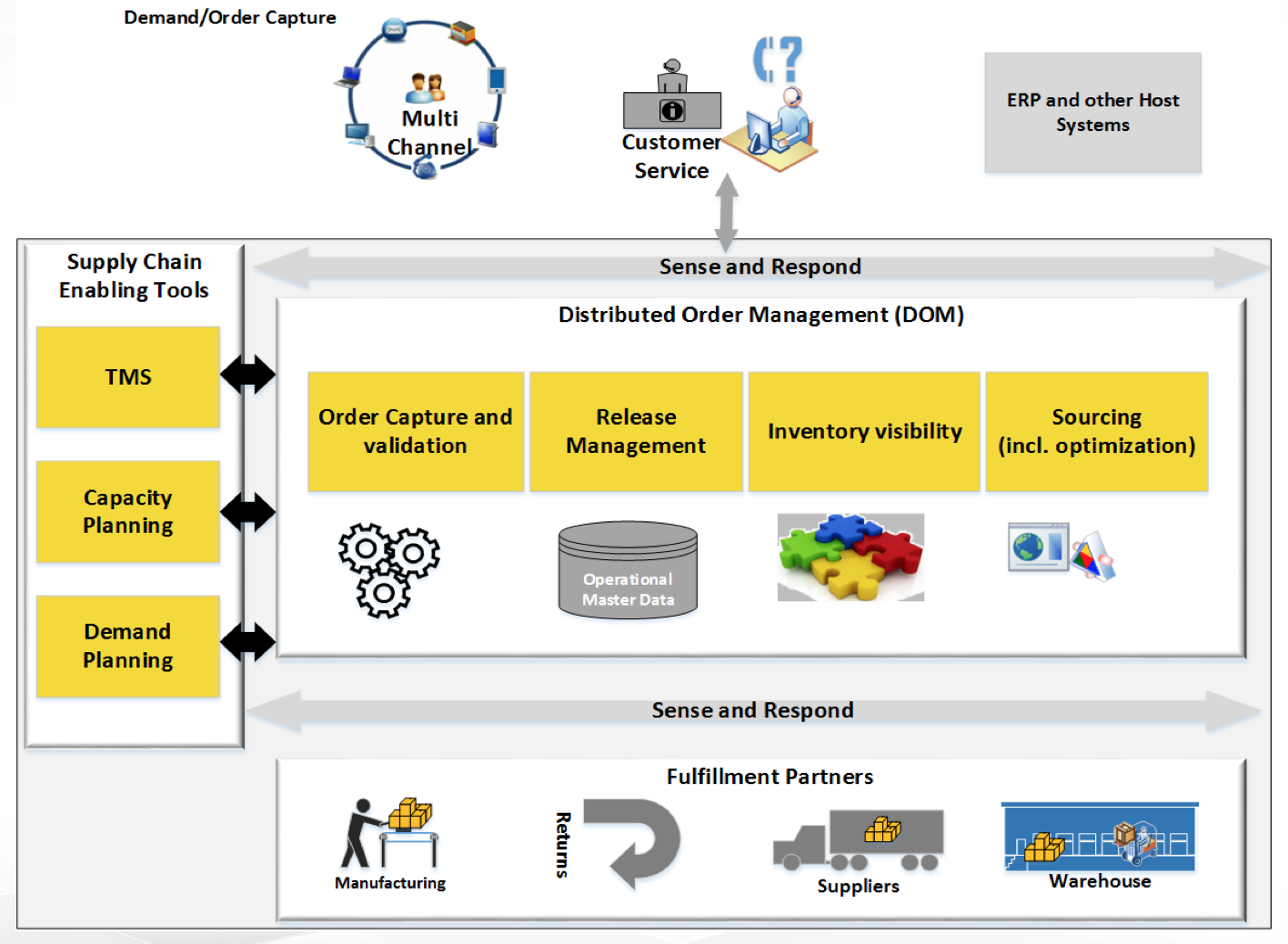
Supply chain management (SCM) is the end-to-end coordination of the activities required to source raw materials, produce goods or deliver services, and ensure they reach customers efficiently, reliably, and sustainably. It spans strategy, planning, execution, and continuous improvement across suppliers, manufacturers, logistics providers, and sales channels. When executed well, SCM lowers costs, improves service levels, and enables organizations to respond quickly to change. If you are asking what is supply chain management and why is it important, the short answer is that it connects every step needed to deliver on your promises to customers while protecting margin and cash flow.
Many readers also search for what is global supply chain. In simple terms, it is the cross-border network of suppliers, factories, warehouses, and transport lanes used to source, make, and deliver products worldwide. Understanding what is supply chain management? in this global context highlights why visibility, risk management, and coordination matter more than ever.
Supply chain management explained
SCM orchestrates the flow of materials, information, and cash from suppliers through production to customers and, when needed, back again. It brings together demand and supply planning, sourcing and procurement, manufacturing or service delivery, logistics and distribution, and after-sales support. While logistics focuses on moving and storing goods, SCM aligns strategy, planning, sourcing, production, logistics, and collaboration across the entire network to meet business goals. This is the practical answer to what supply chain management do day to day: connect plans to actions, actions to outcomes.
Core objectives include:
- Cost efficiency
Minimizing inventory, transportation, and operating expenses without sacrificing service. - Responsiveness
Adapting quickly to demand swings, supply constraints, and market changes. - Resilience
Withstanding disruptions and recovering faster than competitors. - Customer satisfaction
Fulfilling orders accurately and on time to build loyalty and revenue.
SCM draws on contributions from executive leadership (strategy and governance), finance (budgeting and working capital), sales and marketing inputs), supply chain and operations (planning and execution), procurement (supplier relationships), manufacturing (production and quality), regulatory and quality (compliance), logistics (warehousing and transportation), IT (systems and data), sustainability teams (environmental and social goals), and customer service (order support and returns).
External partners include suppliers, contract manufacturers, logistics providers, distributors, and retail or e-commerce channels. When people ask what does a supply chain manager do, the reality is they coordinate across all of these functions to keep promises realistic, costs under control, and risks in check.
Why supply chain management matters
Effective SCM synchronizes demand forecasts with supply plans and optimizes inventory and transportation. The payoff: lower costs, shorter lead times, higher fill rates, and reliable delivery. Better product availability and predictable service translate into improved customer satisfaction and stronger revenue performance. That is what is supply chain management and why is it important in one line: it protects service and profitability at the same time.
SCM also underpins risk mitigation and continuity. It identifies critical suppliers and materials, diversifies sourcing, builds buffer capacities where warranted, and establishes playbooks for disruptions such as shortages, geopolitical events, cyber incidents, and extreme weather. Robust controls, traceability, and documentation support compliance in areas like product safety, trade, sustainability reporting, and financial auditing. These practices are even more critical in a what is global supply chain context, where long distances and multiple jurisdictions raise the stakes.
Modern SCM advances sustainability by reducing waste, emissions, and obsolescence. Examples include right-sizing inventory to avoid write-offs, optimizing loads and routes to cut fuel consumption, and expanding repair, refurbishment, and recycling programs to support circularity. These practices strengthen brand reputation and meet stakeholder expectations for responsible operations. If you have wondered what supply chain management do to support sustainability, this is it: reduce waste, design smarter networks, and make decisions that balance cost, service, and environmental impact.
Key components of a modern supply chain
- Planning and demand forecasting
Translate market signals and sales inputs into demand plans using statistical models, causal drivers, and collaborative inputs from sales, marketing, and customers. Align demand with supply through sales and operations planning (S&OP) or integrated business planning (IBP) to balance revenue, cost, and service targets. - Inventory and order management
Set stocking policies, safety stock, and reorder points by item and location. Use order promising logic such as available-to-promise (ATP) or capable-to-promise (CTP) to provide reliable dates while protecting capacity and inventory positions. - Procurement and supplier management
Qualify and onboard suppliers, negotiate contracts, and manage performance on cost, quality, service, innovation, and sustainability. Build multi-sourcing strategies, supplier development programs, and risk monitoring to improve resilience and capability. - Manufacturing and distribution
Plan capacity, schedule production, and ensure quality while reducing changeovers and downtime. Manage warehousing, transportation, and last-mile delivery to meet customer commitments cost-effectively, leveraging network design to position inventory optimally across plants, distribution centers, and channels. - Returns management and customer service
Handle returns, repairs, and refurbishment efficiently to recover value and protect customer experience. Provide proactive updates, accurate order status, and responsive support throughout the order lifecycle.
If you are thinking what does a supply chain manager do across these components, they align teams, make trade-offs when constraints collide, and keep the plan realistic as conditions change.
Common approaches and strategies
- Lean, agile, and hybrid (leagile)
Lean supply chains focus on waste reduction, standardization, and flow, well-suited to stable demand and high-volume items. Agile strategies emphasize flexibility, short cycles, and responsiveness, ideal for volatile demand, short life cycles, or high-mix environments. Hybrid approaches combine lean efficiency upstream with agile responsiveness downstream, often at a decoupling point where production shifts from forecast-driven to order-driven. - Centralized versus decentralized models
Centralized supply chains consolidate planning, inventory, and purchasing to standardize processes, leverage buying power, and reduce duplication. Decentralized models empower local teams to tailor decisions to market needs and speed execution. Many organizations adopt a federated model, centralizing strategy, data, and standards while decentralizing execution where local responsiveness is critical. - Make-to-stock, make-to-order, and postponement
Make-to-stock builds inventory in advance for rapid fulfillment, relying on accurate forecasts and stable demand. Make-to-order produces after order receipt, reducing inventory risk but requiring flexible capacity and realistic lead times. Postponement delays final configuration until late in the process—holding generic components or semi-finished goods—so products can be customized quickly while minimizing inventory exposure.
These choices play out differently in a what is global supply chain environment than in a local one. Longer lead times and customs processes often push more postponement and regional inventory hubs to keep service steady.
Technology that powers supply chain management
- Core systems
Enterprise resource planning (ERP) integrates finance, procurement, manufacturing, inventory, and order processing. Supply chain planning tools support demand forecasting, supply planning, S&OP, and network design. Warehouse management systems (WMS) control receiving, slotting, picking, packing, and shipping, while transportation management systems (TMS) optimize carrier selection, routing, and freight costs. - Emerging technologies
Real-time visibility platforms track shipments, inventory, and assets using carrier data and IoT sensors. Automation and robotics accelerate picking, packing, and material handling while improving accuracy and safety. Advanced analytics, AI, and machine learning enhance forecasting, detect anomalies, and recommend actions. Digital twins simulate supply networks and facilities to test scenarios, optimize flows, and validate decisions before execution. - Integration and data quality
Accurate, timely data is the foundation of effective SCM. Integrating ERP, planning, WMS, TMS, and external partner systems enables end-to-end visibility and collaboration. Strong data governance, master data management, and standardized processes reduce errors, improve decision-making, and build trust across the supply chain.
For those still wondering what is supply chain management?, technology is the connective tissue that turns plans into coordinated action and gives you the early warning signals to adapt. It is also where what supply chain management do becomes visible through dashboards, alerts, and smart recommendations.
How to improve your supply chain: practical steps
- Assess maturity
Start with a diagnostic across strategy, planning, sourcing, manufacturing, logistics, technology, data, and talent. Identify gaps in governance, metrics, process standardization, and system integration. Map your network and material flows to expose bottlenecks, excess handoffs, and complexity. - Set KPIs and prioritize
Define a focused set of outcome-based KPIs— service level, forecast accuracy, inventory turns, order cycle time, on-time in-full (OTIF), total landed cost, and carbon intensity per unit. Use a valueversus-effort matrix to prioritize initiatives such as standardizing master data, implementing demand planning, improving order promising, or optimizing routing and mode selection. - Strengthen supplier collaboration
Share forecasts and inventory positions, align on lead times and minimum order quantities, and establish joint scorecards. Implement supplier risk assessments and continuity plans, and co-develop cost, quality, and sustainability improvements. - Standardize processes and drive continuous improvement
Document core processes, define roles and decision rights, and apply lean techniques to remove waste and variability. Institutionalize S&OP or IBP to align functions around a single plan. Use root cause analysis, tiered daily management, and structured problem solving to sustain gains. - Select technology for business outcomes
Build a roadmap tied to measurable goals—reduce stockouts, lower days of inventory, improve OTIF, cut freight spend, raise labor productivity, or increase throughput. Favor modular, cloud-ready platforms with strong integration, analytics, and user experience. Pilot new capabilities with clear success criteria, train users, and phase rollouts to manage change effectively.
In short, the practical answer to what is supply chain management and why is it important is this: focus on the few actions that move the needle, measure them honestly, and keep improving. That is what does a supply chain manager do when the job is done well.
Metrics and benchmarks that drive performance
Clear metrics create alignment and accountability. The right dashboard links daily operations to financial and customer outcomes, enabling faster decisions and course corrections.
| Metric | What it measures | Why it matters |
|---|---|---|
| On-time in-full (OTIF) | Orders delivered complete and on schedule | Directly tied to customer satisfaction and penalties |
| Order cycle time | Time from order receipt to delivery | Indicates responsiveness and capacity constraints |
| Inventory turns | How often inventory is sold and replaced | Balances working capital with service levels |
| Forecast accuracy (MAPE) | Deviation between forecast and actual demand | Drives planning quality and buffer requirements |
| Total landed cost | End-to-end cost to deliver a product | Supports sourcing, network, and pricing decisions |
| Return rate and disposition time | Volume of returns and processing speed | Affects margin, recovery value, and satisfaction |
| Carbon intensity per unit | Emissions per product shipped | Supports sustainability targets and reporting |
Building resilience and agility
Volatility is now a constant. Organizations that embed resilience and agility into their supply chains can protect service levels and margin even under stress.
- Network diversification
Use multi-sourcing, regionalization, and nearshoring where feasible to reduce single points of failure. - Strategic buffers
Apply targeted safety stock, safety capacity, and flexible labor to absorb variability without overinvesting. - Scenario planning
Use digital twins and what-if analysis to test disruptions and predefine responses. - Supplier risk management
Monitor financial health, lead times, quality trends, and geopolitical exposure; develop contingency plans. - Real-time visibility
Combine carrier, supplier, and sensor data to detect delays early and automate exception management.
Resilience tactics apply to local and what is global supply chain designs alike, but global networks often benefit most from scenario planning and regional redundancy. It is another place where what supply chain management do behind the scenes makes the difference between a hiccup and a major outage.
People, process, and change management
Technology delivers value only when embedded in disciplined processes and supported by capable teams. Clear ownership, repeatable routines, and continuous learning turn tools into outcomes.
- Governance
Establish decision rights and escalation paths for planning, inventory, and order promising. - Standard work
Document playbooks for forecasting, replenishment, slotting, and carrier selection. - Capability building
Train planners, buyers, and supervisors on systems, analytics, and lean techniques. - Change adoption
Use pilots, super users, and feedback loops to drive adoption and refine processes. - Performance management
Align incentives with cross-functional KPIs, not just local targets.
So, what does a supply chain manager do in change management? They set the cadence, keep the scorecard honest, and help teams make better, faster decisions with the tools at hand.
Putting it all together
SCM connects strategy to execution, from sourcing and production through warehousing, transportation, and customer service. The most effective supply chains blend clear objectives, disciplined processes, reliable data, and modern technology to deliver predictable service at the lowest feasible cost. By aligning planning with execution and building resilience into the network, organizations can increase throughput, control costs, scale capacity, and maintain service commitments even when conditions change.
If your first question was what is supply chain management?, the complete answer is this: it is the system that keeps promises to customers by coordinating every moving part, especially in a what is global supply chain setting. And if you still wonder what is supply chain management and why is it important, remember that strong execution turns strategy into results— and that is exactly what supply chain management do when it is done right.
FAQ
Logistics focuses on moving and storing goods—transportation, warehousing, and order fulfillment. SCM is broader, aligning strategy, planning, procurement, manufacturing, logistics, and partner collaboration across the entire network to achieve business goals. This breadth is the key to understanding what is supply chain management? in practice.
Common priorities include on-time in-full (OTIF), order cycle time, inventory turns, forecast accuracy, total landed cost, pick accuracy, and carbon intensity per unit. The right set depends on your service promises, product mix, and network design.
Optimize mode and carrier mix, consolidate shipments, improve cube and weight utilization, refine network design, and use dynamic routing. Accurate order promising and better slotting in the warehouse also reduce expedites and handling costs.
Sales and operations planning (S&OP) is a cross-functional process that aligns demand and supply plans with financial targets. It creates a single, agreed plan, enabling faster decisions, better service, and more efficient inventory and capacity use.
Make-to-stock suits stable demand and short lead times where availability is critical. Make-to-order fits variable demand or high customization, where holding finished goods is risky. Hybrids like postponement use generic components and configure late to balance speed with flexibility.
Digital twins model facilities and networks to test scenarios—demand surges, lane closures, capacity changes—without disrupting operations. They help validate decisions on inventory, labor, and network design before committing resources.
ATP checks current and planned inventory to provide a delivery date. CTP considers both inventory and production or supplier capacity, offering more precise dates for make-to-order items or constrained environments.
Optimize mode and carrier mix, consolidate shipments, improve cube and weight utilization, refine network design, and use dynamic routing. Accurate order promising and better slotting in the warehouse also reduce expedites and handling costs.