Empowering The Heart of Your Supply CHain: Why Warehouse Execution Systems Matter More Than Ever
 by Mike Catalino

Your warehouse is the heart of your supply chain. Every order, shipment, and replenishment cycle depends on its steady rhythm. But as automation, robotics, and labor constraints reshape the logistics landscape, the warehouse can no longer rely on static processes or manual coordination alone.
To keep that heart healthy and responsive, warehouses need a smarter way to connect planning with execution. That’s where warehouse execution systems (WES) come in.
According to Gartner’s Use the Right Software to Support Warehouse Automation and Robotics (2025), by 2028, 80% of warehouses will deploy some form of automation, and by 2030, one-third of medium and large warehouses will operate at least one robotics platform. Gartner also cautions that without the right supporting software, automation investments often underperform, resulting in idle equipment, bottlenecks, and missed service levels.
From Planning to Execution: Where WES Fits
Traditional warehouse management systems (WMS) remain essential. They serve as the system of record, managing inventory, enforcing processes, and supporting compliance. But as warehouses introduce robotics, goods-to-person systems, AMRs, and higher service expectations, the gap between planning and execution widens.
A WES fills that gap.
Rather than replacing the WMS, a WES operates alongside it as a real-time execution and orchestration layer. It translates plans into action, continuously adjusting priorities based on actual conditions on the floor, such as labor availability, automation capacity, order urgency, and throughput constraints.
Real-Time Orchestration in Dynamic Environments
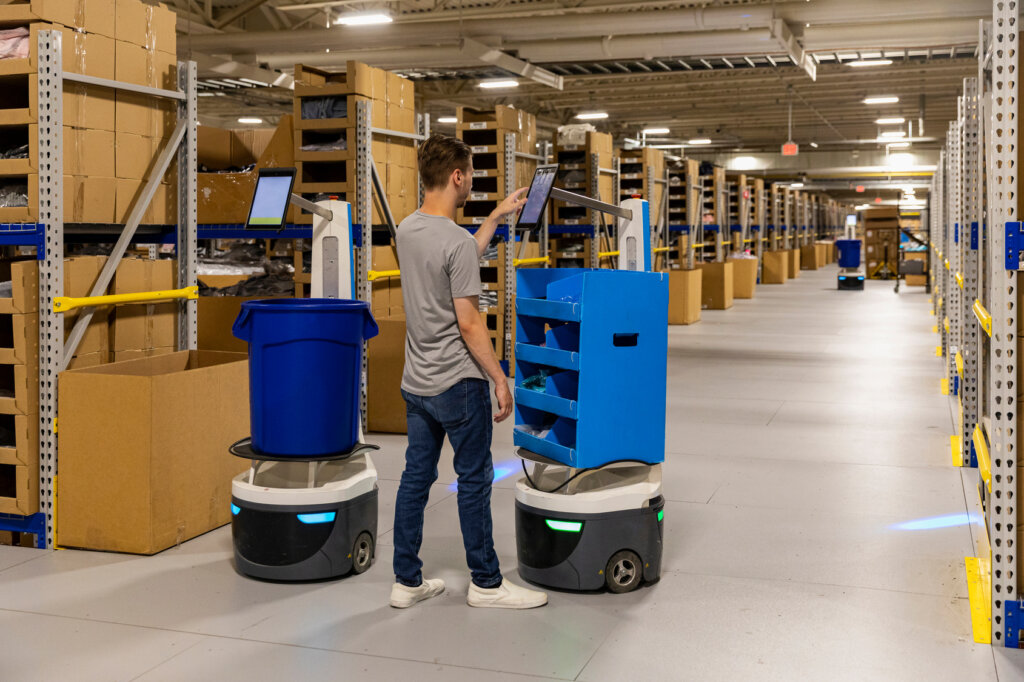
A WES provides the real-time connectivity needed to respond. By integrating with the WMS, automation systems, conveyors, sortation, and labor management tools, it ensures that work is continuously balanced and released in the most efficient way.
Gartner highlights this orchestration capability as a key differentiator, especially in hybrid environments where people and machines must work together. Without it, warehouses risk creating new bottlenecks as automation scales.
Built for Change, Not Just Automation
Many organizations have learned the hard way that rigid automation can become a constraint rather than a competitive advantage. As Gartner notes, solutions that lack flexibility struggle to adapt as business requirements evolve.
A WES avoids this pitfall by acting as a flexible orchestration layer. It’s designed to evolve as operations change, whether that means adding new robotics platforms, expanding e-commerce fulfillment, supporting value-added services like kitting and repacking, or extending into micro-fulfillment.
Rather than locking warehouses into a single automation approach, a WES helps future-proof the operation.
Enabling a Connected Automation Ecosystem
A healthy warehouse doesn’t operate in isolation. Success increasingly depends on an ecosystem of interoperable technologies and partners.
Leading organizations are pairing WMS and WES capabilities with multi-agent orchestration platforms (MAO) to integrate diverse fleets of AMRs, AGVs, conveyors, and other intralogistics technologies. This approach allows warehouses to scale and innovate without being tied to a single automation vendor.
When aligned with the right partners, a WES becomes the connective layer that keeps the entire operation synchronized.
Keeping the Pulse Strong
The warehouse remains the heart of the supply chain, but today, that heart is under more pressure than ever. Labor shortages, rising customer expectations, and increasing automation complexity demand a new level of operational intelligence.
A warehouse execution system provides that intelligence by connecting planning to execution in real time.